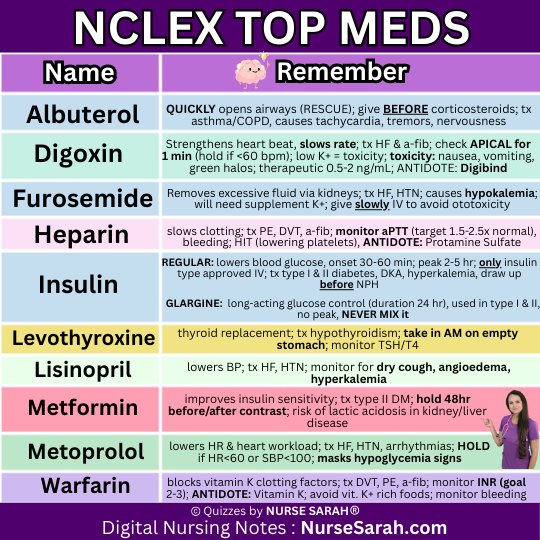
As a nursing student, mastering common medications is essential. This is not only for safe patient care but also for passing the NCLEX exam. This review provides a quick review of the most frequently encountered drugs in nursing practice, including their uses, key nursing considerations, and potential side effects.
Albuterol
Purpose: Albuterol is a fast-acting bronchodilator used to open up the airways.
Uses:
- Asthma
- Chronic obstructive pulmonary disease (COPD)
Key Nursing Tips:
- Always administer before corticosteroids to allow medication to reach the lungs effectively.
- Monitor for increased heart rate, tremors, and nervousness, which are common side effects.
Digoxin
Purpose: Digoxin strengthens heart contractions while slowing the heart rate.
Uses:
Nursing Considerations:
- Check the apical pulse for 1 full minute before administration; hold if <60 bpm in adults
- Monitor potassium levels, as hypokalemia increases the risk of toxicity
- Signs of toxicity include vision changes, nausea, and vomiting
- Therapeutic range: 0.5–2 ng/mL
- Antidote: Digibind
Furosemide (Lasix)
Purpose: Furosemide is a loop diuretic that removes excess fluid via the kidneys.
Uses:
- Fluid overload in heart failure
- Hypertension
Key Nursing Tips:
- Monitor potassium levels to prevent hypokalemia; consider supplements or potassium-rich foods.
- Administer IV slowly to avoid ototoxicity.
Pharmacology NCLEX Review
Heparin
Purpose: Heparin prevents clot formation by slowing the blood’s clotting ability.
Uses:
- Pulmonary embolism (PE)
- Deep vein thrombosis (DVT)
- Atrial fibrillation
Nursing Considerations:
- Monitor aPTT (target: 1.5–2.5 × normal).
- Watch for excessive bleeding and heparin-induced thrombocytopenia (falling platelet counts).
- Antidote: Protamine sulfate.
Insulin
Insulin helps regulate blood glucose levels. There are different types:
Regular Insulin
- Onset: 30–60 minutes
- Peak: 2–5 hours
- Uses: Type 1 & 2 diabetes, diabetic ketoacidosis (DKA), hyperkalemia
- Nursing Tip: Only insulin approved for IV use. When mixing with NPH insulin, draw regular insulin first (“clear to cloudy” or RN = Regular → NPH).
Glargine (Long-Acting)
- Provides 24-hour glucose control
- No peak
- Do not mix with other insulins
Levothyroxine
Purpose: Thyroid hormone replacement for hypothyroidism
Nursing Tips:
- Administer in the morning on an empty stomach
- Monitor TSH and T4 levels
Lisinopril
Purpose: ACE inhibitor used to lower blood pressure
Uses:
- Hypertension
- Heart failure
- Nursing Considerations:
- Monitor for dry cough, which is common but bothersome.
- Watch for angioedema and hyperkalemia.
Metformin
Purpose: Improves insulin sensitivity in patients with type 2 diabetes
Key Points:
- Hold before and after contrast procedures (~48 hours).
- Risk of lactic acidosis in patients with liver or kidney disease.
Metoprolol
Purpose: Beta-blocker that reduces heart rate and cardiac workload
Uses:
- Heart failure
- Hypertension
- Arrhythmias
Nursing Considerations:
- Hold if HR <60 bpm or SBP <100 mmHg.
- Can mask hypoglycemia symptoms in diabetic patients (tachycardia, tremors).
Warfarin
Purpose: Anticoagulant that blocks vitamin K-dependent clotting factors
Uses:
- DVT
- PE
- Atrial fibrillation
Nursing Tips:
- Monitor INR (goal: 2–3).
- Antidote: Vitamin K
- Educate patients to avoid vitamin K-rich foods and watch for excessive bleeding.
Cheat Sheet for Top Medications to Know as a Nurse and on NCLEX