Hypochloremia and hyperchloremia NCLEX questions quiz for nursing students! This review quiz will test your knowledge on the causes, symptoms, and nursing interventions of hypochloremia and hyperchloremia. Before taking this quiz, you might want to review our hypochloremia and hyperchloremia lecture.
Don’t forget to review the hypochloremia vs. hyperchloremia notes.
This electrolyte imbalance is many times associated with an imbalance of sodium and bicarbonate. In addition, an imbalance of potassium will occur, especially if alkalosis or acidosis is presenting.
Hypochloremia and Hyperchloremia NCLEX Questions
Hypochloremia and Hyperchloremia NCLEX Questions Quiz
(NOTE: When you hit submit, it will refresh this same page. Scroll down to see your results.)
Nurse Sarah’s Notes and Merch
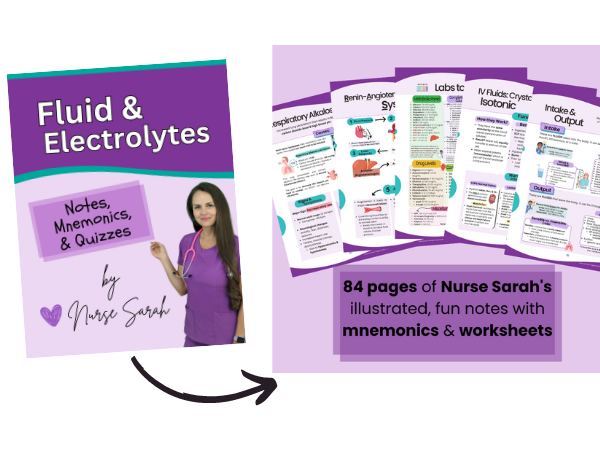
Just released is “Fluid and Electrolytes Notes, Mnemonics, and Quizzes by Nurse Sarah“. These notes contain 84 pages of Nurse Sarah’s illustrated, fun notes with mnemonics, worksheets, and 130 test questions with rationales.
You can get an eBook version here or a physical copy of the book here.
Hyperchloremia and Hypochloremia NCLEX Question Nursing Quiz
1. Which of the following does Chloride NOT play a role in?
A. Digestion
B. Acid-base balance
C. Fluid balance
D. Bone health
The answer is D: Bone health
2. A patient has a Chloride level of 70 mEq/L. Which condition below can cause this type of level?
A. None, this is a normal Chloride level.
B. Cystic Fibrosis
C. Metabolic acidosis
D. Hypertonic fluids
The answer is B: Cystic Fibrosis
3. A patient is presenting with metabolic alkalosis. Lab results are back and the patient’s bicarb level is 53 mEq/L. What other lab result would correlate with this finding?
A. Chloride 73 mEq/L
B. Chloride 190 mEq/L
C. Potassium 6.5 mEq/L
D. Chloride 100 mEq/L
The answer is A. Hypochloremia (<95 mEq/L) will present with metabolic alkalosis. In this condition, bicarb is elevated which causes chloride to decrease. Remember chloride and bicarb have an opposite relationship on each other due to how these ions are exchanged in the red blood cells. Therefore, hypochloremia can present.
4. You’re assessing a patient’s morning lab work. The patient has a chloride level of 98 mEq/L. The nurse interprets this finding as?
A. Hypochloremia
B. Normal
C. Hyperchloremia
The answer is B. A normal chloride level is 95-105 mEq/L.
5. Which patient below is at risk for developing hyperchloremia?
A. A 25-year-old with cystic fibrosis.
B. A 55-year-old post-op from abdominal surgery that has a nasogastric tube with continuous suctioning.
C. A 62-year-old prescribed IV loop diuretics for the treatment of heart failure.
D. A 53-year-old who received several large fluid boluses of Normal Saline.
The answer is D. The administration of Normal Saline (0.9% of Sodium-Chloride), especially large boluses can lead to hypernatremia and hyperchloremia. When these types of fluids are administered the nurse should monitor for these conditions.
6. True or False: When metabolic acidosis occurs, the bicarb level is decreased and hyperchloremia can develop.
A. True
B. False
The answer is A, TRUE.
7. Lactated Ringer’s can be prescribed to treat?
A. Hypochloremia
B. Hyperchloremia
C. Metabolic alkalosis
D. None, this IV fluid is not typically prescribed for chloride imbalance disorders.
The answer is B. Lactated Ringer’s may be used to help decrease an elevated chloride level (hence hyperchloremia). Why? Once this fluid enters the body it turns the lactate into bicarb, which helps increase the body’s bicarb level and lower chloride levels. Remember the opposite effect bicarb and chloride have on each other.
8. A patient has a Chloride level of 190 mEq/L. Which foods below should the patient avoid? Select all that apply:
A. Carrots
B. Canned beans
C. Table Salt
D. Tomato juice
E. Olives
F. Chicken
The answers are: B, C, D, E. A chloride level of 190 is high. The patient should avoid foods high in chloride. Remember that anything high in salt (sodium chloride) hence that’s salty….is also high in chloride. Therefore, anything processed or canned will be high in chloride along with tomatoes, olives, etc.
9. A patient has a chloride level of 63 mEq/L. The patient is experiencing lethargy, confusion, spasms of muscles, and has a blood pressure of 90/54. What other lab finding below correlates with these findings?
A. Potassium 4 mEq/L
B. Potassium 8 mEq/L
C. Sodium 115 mEq/L
D. Sodium 190 mEq/L
The answer is C. A normal chloride level is 95-105 mEq/L. The patient is experiencing hypochloremia. Remember sodium and chloride mirror each other (when one is low the other is as well and vice versa). The patient is exhibiting signs and symptoms of hyponatremia. Therefore, a sodium level of 115 mEq/L would correlate with these findings.
10. Which type of IV fluid below can be prescribed to treat a patient with a chloride level of 69 mEq/L?
A. Sodium Bicarbonate
B. Normal Saline
C. Lactated Ringer’s
D. 5% Saline
The answer is B. A chloride level of 69 mEq/L is too low and hypochloremia is presenting. Normal Saline (0.9%) can be used to replace chloride in cases of hypochloremia.
Please tell your friends about this quiz by sharing this link to this quiz on your Facebook, Twitter, and other social media. You can also take more fun nursing quizzes.
*Disclaimer: While we do our best to provide students with accurate and in-depth study quizzes, this quiz/test is for educational and entertainment purposes only. Please refer to the latest NCLEX review books for the latest updates in nursing. This quiz is copyright RegisteredNurseRn.com. Please do not copy this quiz directly; however, please feel free to share a link to this page with students, friends, and others.