When studying for maternity nursing exams or the NCLEX, it is important to recognize the classic eponymous signs of pregnancy. These signs are named after the healthcare providers who first described them and are considered probable signs of pregnancy.
Probable signs suggest pregnancy may be present, but they are not definitive because similar changes can occur in other conditions.
To access more free nursing reviews, check out our maternity nursing videos.
Below are five important early pregnancy signs every nursing student should know.
Chadwick’s Sign

What Is Chadwick’s Sign?
Chadwick’s sign is a bluish-purple discoloration of the:
- Cervix
- Vagina
- Vulva
It usually occurs around 6 to 8 weeks of pregnancy. The sign is named after Dr. James Chadwick.
Why It Happens
The discoloration occurs because of:
- Increased blood flow
- Increased vascular congestion during pregnancy
NCLEX Memory Trick
- “Chadwick = Color Change”
- Both words start with the letter C.
- Another memory aid:
- “Chad thinks blue is rad.”
- Think blue-purple discoloration
Goodell’s Sign
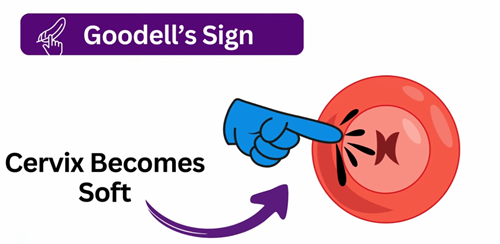
What Is Goodell’s Sign?
Goodell’s sign refers to softening of the cervix during early pregnancy. It typically occurs around 4 to 8 weeks of gestation. The sign is named after Dr. William Goodell.
Why It Happens
The cervix becomes softer because of:
- Increased vascularization
- Hormonal changes during pregnancy
Normally, the cervix feels firm, but in pregnancy it becomes softer and more compressible.
NCLEX Memory Trick
“Goodell = Good and soft”
Think:
- Soft
- Squishy
- Gel-like cervix
Hegar’s Sign
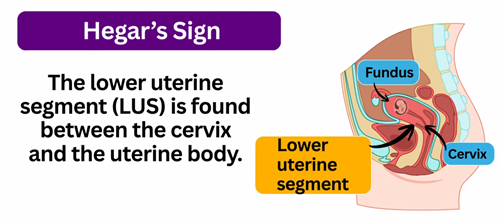
What Is Hegar’s Sign?
Hegar’s sign is the softening of the lower uterine segment during pregnancy. It usually occurs around 6 to 12 weeks of gestation. The sign is named after Dr. Ernst Ludwig Hegar.
Key Features
- The cervix
- The uterine body
- Assessed during a bimanual pelvic exam
Why It Happens
The lower uterine segment softens because of:
- Increased vascularization
- Hormonal effects of pregnancy
Ladin’s Sign
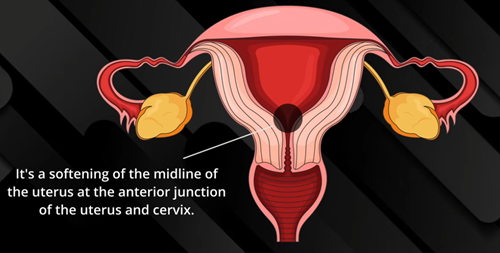
What Is Ladin’s Sign?
Ladin’s sign refers to a soft midline spot on the anterior uterus. It usually occurs around 6 weeks of pregnancy. The sign is named after Dr. Louis Ladin.
Key Features
- Softening felt on the anterior uterus
- Assessed during a bimanual pelvic examination
- Caused by increased vascularization and hormonal changes
NCLEX Tip
Ladin’s sign is considered a probable sign of pregnancy.
Piskacek’s Sign
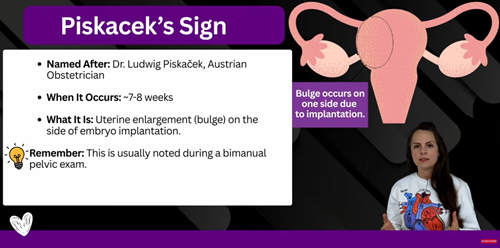
What Is Piskacek’s Sign?
Piskacek’s sign is an asymmetrical enlargement of the uterus caused by implantation on one side. It typically occurs around 7 weeks of pregnancy. The sign is named after Dr. Ludwig Piskacek.
Key Features
- Uneven uterine enlargement
- Swelling occurs on the implantation side
- Detected during a bimanual pelvic examination
Why It Happens
The area surrounding the implanted embryo enlarges faster than the opposite side of the uterus, creating asymmetrical swelling.
Are These Positive Signs of Pregnancy?
No. All five of these signs are considered:
Probable Signs of Pregnancy
They suggest pregnancy may be present, but they are not definitive because similar changes can occur with other gynecologic conditions.
How Pregnancy Is Confirmed
Pregnancy confirmation requires:
- Detection of human chorionic gonadotropin (hCG)
- Ultrasound, which provides positive evidence of pregnancy
Key NCLEX Concepts
These five classic eponymous signs are:
- Early pregnancy findings
- Assessed during pelvic examination
- Considered probable, not positive, signs of pregnancy
Maternity Nursing Study Guide

Save Time Studying and Actually Learn
Nurse Sarah’s Maternity Nursing Study Notes are designed to help you study faster, remember more, and stress less. With 151 pages of simplified summaries, illustrations, mnemonics, and visual breakdowns, you’ll breeze through even the trickiest OB topics.
Laser-Focused on What You’ll See on Exams
Whether you’re prepping for nursing school exams or the NCLEX®, these notes focus on the exact maternity/OB concepts you’re most likely to be tested on with no filler, no wasted time.
Memory Hacks, Visuals & Rationales That Make It Stick
Colorful illustrations and proven mnemonics help you actually retain the material, while 220 practice questions with in-depth rationales teach you the “why” behind the right answers so that you’re not just memorizing, you’re understanding.
Available at: NurseSarah.com and Amazon.com* (This is an affiliate link. We may earn a small commission if you make a purchase through this link at no extra cost to you).
You may be interested in: Presumptive, Probable, Positive Pregnancy