Learn how to apply and remove a transdermal patch. Transdermal patch application is easy, but as the nurse you must know how to properly remove and apply a patch. This tutorial will cover the application of a Fentanyl transdermal patch.
What are transdermal patches? They are medicated sticky, adhesive patches wore on the skin. The adhesive backing on the patch that sticks to the skin contains medication that is continuously delivered via the skin to the bloodstream. Many different types of medications can be ordered via the transdermal route. One of these medications are Fentanyl.
 What is Fentanyl? It is an opioid pain medication used to treat severe pain. Patients who use transdermal Fentanyl patches are opioid tolerant, meaning they experience chronic, severe pain that cannot be controlled with oral opioid medications. Therefore, the transdermal patch can deliver continuous amounts of Fentanyl to help manage the patient’s pain. These patches are not for patients who have never taken oral opioid medications (these patches usually contain high doses of Fentanyl and can be too strong for patients who have never taken Fentanyl, which can lead to severe side effects), acute pain such as post-op or surgical related etc.
Nurse’s Role with a Transdermal Patch of Fentanyl:
When administering a new patch, ALWAYS remove the previous patch before applying the new one.
ALWAYS wear gloves when removing and applying a Fentanyl patch! Why? To prevent becoming contaminated with the drug.
ALWAYS have another nurse witness you disposing of the old Fentanyl patch and dispose according to your hospital’s protocol. Every employer has specific guidelines for how this is done.
Never apply a new transdermal patch on the same site (always rotate sites), broken or irritated skin, or on hair (it will not stick).
Sites to place a transdermal patch include: upper arm, chest, or back. If the patient is confused, place the patch on a site where the patient cannot easily pull it off.
Always time, date, and initial the patch.
When applying a new patch, assess the patient for adverse side effects:
- Respiratory depression
- Hypotension
- Decreased mental status (lethargic, confused etc.)
- Pain rating and it’s location
You may have to reinforce the patch with a tegaderm or tape to keep it from falling off, especially if the patient is sweaty, has oily skin, or it is located on an area that experiences a lot of friction.
Always chart where you place the patch so when the next dose is due the next nurse knows where to find the patch.
Video Demonstration on Transdermal Patch Application
Steps on How to Remove a Transdermal Patch

- Note in the chart where the last nurse charted the location of the previous patch
- Wash hands and don gloves
- Remove patch from skin and fold it sticky side to sticky side

- Dispose per hospital protocol with another nurse as a witness
- Clean site with warm water to remove any residue or dead skin cells from the site
- Doff gloves and wash hands
Steps on How to Apply a Transdermal Patch
- Perform the patient’s 5 Rights:
- Right patient
- Right drug
- Right dose
- Right route
- Right time
2. Check the packaging (make sure it is not torn or expired)
3. Open new patch: don’t use scissors because you can mistakenly cut the patch
4. Date, time, and initial the patch (the patch still has the protective backing so do this on the opposite side)

5. Wash hands and don gloves
6. Pick a new site to place the patch and make sure skin is clean, intact, and free from hair. If hair is present, trim it (don’t shave it), and if the skin is dirty cleanse it with warm water only (not soap or lotions…this can prevent it from sticking).
7. Carefully take off one side of the back and stick it to the skin and then take off the other side of the backing.
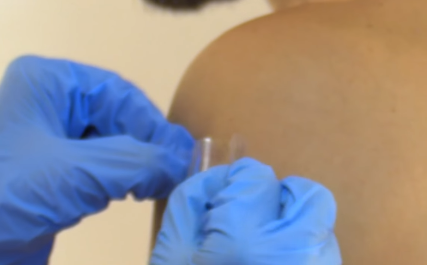
8. Firm press down the patch for at least 15 to 20 seconds (make sure it has no bumps, folds, or bubbles). You may have to reinforce it with extra tape.

9. Chart location of the patch so the next nurse who removes it knows where it is.
More Nursing Skills