The integumentary system consists of the skin and its appendages, including nails, hair, and glands. In this anatomy quiz, you can test your knowledge on the glands of the skin, including eccrine glands, apocrine glands, sebaceous glands, mammary glands, ciliary glands, and ceruminous glands.
Before taking this skin glands quiz below, you might want to review our skin glands anatomy notes (coming soon). In addition, you might want to view our skin glands video lecture.
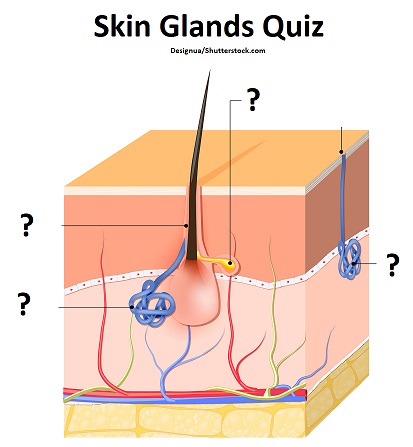
Skin Glands Anatomy
(NOTE: When you hit submit, it will refresh this same page. Scroll down to see your results.)
1. What are the two main types of sweat glands called?
a. Sebaceous glands and sudoriferous glands
b. Eccrine and apocrine glands
c. Mammary glands and ceruminous glands
d. Sebaceous glands and mammary glands
The answer is b, eccrine and apocrine glands are the two main types of sweat glands. Mammary glands, ciliary glands, and ceruminous glands are special modified apocrine sweat glands, and sebaceous glands are the oil glands of the skin.
2. Which glands are especially concentrated on the palms of the hand, soles of the feet, and head?
a. Apocrine glands
b. Ceruminous glands
c. Eccrine glands
d. Sebaceous glands
The answer is c, eccrine glands. These sweat glands are found almost everwhere on the body, but they are especially concentrated on the palms, soles, and head.
3. Which glands produce an oily substance called sebum?
a. Sebaceous glands
b. Eccrine glands
c. Apocrine glands
d. Mammary glands
The answer is a, sebaceous glands. These glands produce the oily, waxy substance called sebum, which helps to lubricate the skin and hair, and it also helps the skin retain moisture.
4. Sweat glands release their contents via exocytosis and a type of secretion called holocrine secretion.
a. True
b. False
The answer is b, false. While all sweat glands do release their contents via exocytosis, the secretion type is merocrine secretion, which means that the cell is not damaged during the secretion process. In contrast, sebaceous glands secrete contents via holocrine secretion, as the cells are damaged when they rupture and release their contents.
5. Sebaceous glands produce a substance called what?
a. Sebum
b. Cerumen
c. Sweat
d. Milk
The answer a, sebum. This is easy to remember because sebaceous and sebum both start with “seb.” Sebum is an oily, wax-like substance that helps the skin retain moisture while also lubricating the skin and hair.
6. Ceruminous glands secrete which substance?
a. Sebum
b. Cerumen
c. Sweat
d. Milk
The answer is b, cerumen, which is also called earwax. This substance helps lubricate and protect the external ear canal.
7. Apocrine glands are typically found in which areas of the skin?
a. Palms and soles
b. Armpits
c. Anogenital region
d. Both b and c
The answer is d, both b and c. The apocrine glands are mostly found in the armpits and the anogenital region. Apocrine starts with the letter a, and so do these areas, so that can help you remember the location.
8. Sebaceous glands and apocrine glands typically become active during puberty.
a. True
b. False
The answer is a, true. These glands are activated during the hormonal changes associated with puberty.
9. Eccrine glands begin functioning around puberty.
a. True
b. False
The answer is b, false. Eccrine sweat glands are the primary means to cool the body, and these glands typically begin functioning shortly after birth.
10. Mammary glands secrete which substance?
a. Sebum
b. Cerumen
c. Sweat
d. Milk
The answer is d, milk. Mammary glands typically secrete milk in lactating mothers shortly after giving birth.
11. Which of the following is not considered a “modified sweat gland?”
a. Ciliary glands
b. Mammary glands
c. Ceruminous glands
d. Eccrine glands
The answer is d, eccrine glands are one of the main types of sweat glands. Ciliary glands, mammary glands, and ceruminous glands are considered special modified apocrine sweat glands.
12. Ciliary glands are located in which region of the body?
a. The external ear canal
b. The soles of the feet
c. The eyelids
d. The armpits
The answer is c, the eyelids. Ciliary glands are modified sweat glands.
13. Sweat glands and sebaceous glands originate in the epidermis but develop down into the dermis and hypodermis during fetal development.
a. True
b. False
The answer is a, true. Both gland types originate from epidermal tissue but later grow down into deeper skin layers.
14. Which type of gland secretes its product via holocrine secretion?
a. Eccrine glands
b. Apocrine glands
c. Sudoriferous glands
d. Sebaceous glands
The answer is d, sebaceous glands. Holocrine secretion is a type of secretion in which the cell is damaged or ruptured, allowing it to secrete its substance.
15. Which glands attach to hair follicles in the skin?
a. Apocrine glands and eccrine glands
b. Apocrine glands and sebaceous glands
c. Eccrine glands and sudoriferous glands
d. Sebaceous glands and eccrine glands
The answer is b, apocrine glands and sebaceous glands typically attach to hair follicles in the skin.
Don’t forget to tell your friends about this quiz by sharing it your Facebook, Twitter, and other social media. You can also take more fun nursing quizzes.
*Disclaimer: While we do our best to provide students with accurate and in-depth study quizzes, this quiz/test is for educational and entertainment purposes only. Please refer to the latest NCLEX review books for the latest updates in nursing. This quiz is copyright RegisteredNurseRn.com. Please do not copy this quiz directly; however, please feel free to share a link to this page with students, friends, and others.