Registered Nurse RN

Registered Nurse, Free Care Plans, Free NCLEX Review, Nurse Salary, and much more. Join the nursing revolution.

  • RN
    • Nursing Clinical Skills
  • Nursing Videos
  • Blog
  • Nursing School
  • Nursing Care Plans
  • Nursing Quizzes
  • Nursing
  • Nursing Jobs
  • NCLEX Review
  • Store

Sinus Bradycardia ECG/EKG Rhythm NCLEX Quiz

Sinus bradycardia ECG interpretation review quiz for nurses! This EKG quiz will test your knowledge on how to identify sinus bradycardia, causes of this rhythm, nursing interventions for sinus bradycardia, and treatment. As the nurse, it is vital you are able to determine if a patient is experiencing sinus bradycardia and what signs and symptoms require intervention for this rhythm. Before taking this quiz, don’t forget to review the lecture on ECG/EKG Interpretation Basics and access the lectures in this ECG series. Also, here are the sinus bradycardia notes to review before taking the quiz.

Sinus Bradycardia NCLEX ECG/EKG Rhythm Quiz
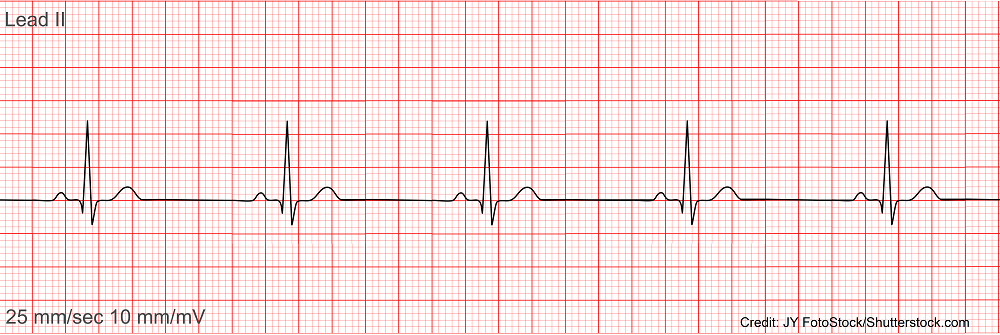
Sinus Bradycardia ECG Quiz NCLEX

1. Sinus bradycardia originates in what part of the electrical conduction system?(Required)
2. You're analyzing a patient's ECG reading. What should be found in the rhythm for it to be considered Sinus Bradycardia (select all that apply):(Required)
3. You obtain an ECG on a patient and the rhythm is sinus bradycardia with a rate of 52 bpm. Your NEXT nursing action is to?(Required)
4. Your patient is experiencing extreme fatigue, hypotension, palpations, and shortness of breath. You obtain an ECG and discover a rhythm of sinus bradycardia with a rate of 40 bpm. What finding below could be causing this condition?(Required)
5. Which of the following is NOT a treatment for symptomatic sinus bradycardia?(Required)
6. A patient is experiencing sinus bradycardia with a rate of 34 bpm and blood pressure of 78/42. The patient reports symptoms of chest pain, has cool and clammy skin, dyspnea, and feels like they may faint. The nurse prepares to administer Atropine per a standing physician's order for the patient's symptomatic bradycardia. How will the nurse administer this medication?(Required)
7. Referring back to the previous question (6), Atropine was ineffective for treating the bradycardia. The patient is still symptomatic with a rate 35 bpm. What other options could be considered for the patient? Select all that apply:(Required)
8. Which medication below should not be used for the treatment of sinus bradycardia in a patient with a transplanted heart?(Required)
9. Use the figure at the top of the quiz to answer the next few questions: What is the rate of the rhythm above?(Required)
10. What is the PR interval of the rhythm above?(Required)
11. What is the QRS interval of the rhythm above?(Required)
(NOTE: When you hit submit, it will refresh this same page. Scroll down to see your results.)

ECG/EKG Study Guide and Workbook for Nursing Students
ekg ecg interpretation, ecg ekg study guide, nurse sarah, ecg workbook

“ECG/EKG Interpretation Study Guide and Workbook by Nurse Sarah”. This book contain 100 pages of content featuring 26 ECG rhythm break downs, 51 ECG rhythm analysis practice problems, 100 comprehensive ECG practice questions, worksheets, chart summaries, and more.

You can get an eBook version here: “Nurse Sarah ECG Book” or a physical copy here: “ECG/EKG Interpretation Study Guide by Nurse Sarah“.

Sinus Bradycardia ECG/EKG NCLEX Quiz

sinus bradycardia quiz, ecg ekg quiz, ecg interpretation quiz, heart rhythms 1. Sinus bradycardia originates in what part of the electrical conduction system? A. AV node B. SA node C. Bundle Branches D. Bundle of His The answer is B: SA node 2. You’re analyzing a patient’s ECG reading. What should be found in the rhythm for it to be considered Sinus Bradycardia (select all that apply): A. One p wave present in front of every QRS complex B. Atrial rate 60 and ventricular rate of 60 C. Regular atrial and ventricular rate D. Atrial rate 40 and ventricular rate of 40 E. Regular atrial rate and irregular ventricular rate F. PR interval 0.14 seconds G. PR interval 0.36 seconds H. QRS interval 0.08 seconds I. QRS interval 0.16 seconds The answers are A, C, D, F, and H. 3. You obtain an ECG on a patient and the rhythm is sinus bradycardia with a rate of 52 bpm. Your NEXT nursing action is to? A. Prepare to administer Atropine IV push B. Set-up for transcutaneous pacing C. Assess the patient D. Call a rapid response The answer is C: Assess the patient. When discovering sinus bradycardia, the nurse should determine if the patient is having symptoms. Not all cases of this rhythm require medical treatment. 4. Your patient is experiencing extreme fatigue, hypotension, palpations, and shortness of breath. You obtain an ECG and discover a rhythm of sinus bradycardia with a rate of 40 bpm. What finding below could be causing this condition? A. Potassium level of 3.9 meq/L B. Lisinopril 10 mg BID PO C. Blood glucose 84 D. Digoxin 0.125 mg PO daily The answer is D. Digoxin slows down the heart rate and can lead to bradycardia. 5. Which of the following is NOT a treatment for symptomatic sinus bradycardia? A. Dopamine B. Atropine C. Synchronized cardioversion D. Transcutaneous pacing The answer is C: Synchronized cardioversion 6. A patient is experiencing sinus bradycardia with a rate of 34 bpm and blood pressure of 78/42. The patient reports symptoms of chest pain, has cool and clammy skin, dyspnea, and feels like they may faint. The nurse prepares to administer Atropine per a standing physician’s order for the patient’s symptomatic bradycardia. How will the nurse administer this medication? A. 3 mg IV push every 3-5 minutes, max dose of 5 mg B. 2 mg IV push every 1-2 minutes, max dose of 3 mg C. 3-5 mg IV push every 1 minute, max dose 10 mg D. 1 mg IV push every 3-5 minutes, max dose of 3 mg The answer is D: Atropine for symptomatic bradycardia should be given as 1 mg IV push every 3-5 minutes, max dose of 3 mg. 7. Referring back to the previous question (6), Atropine was ineffective for treating the bradycardia. The patient is still symptomatic with a rate 35 bpm. What other options could be considered for the patient? Select all that apply: A. Transcutaneous pacing B. Amiodarone Infusion C. Dopamine Infusion D. Epinephrine Infusion The answers are A, C, and D. 8. Which medication below should not be used for the treatment of sinus bradycardia in a patient with a transplanted heart? A. Isoproterenol B. Atropine C. Epinephrine D. Glucagon The answer is B: Atropine 9. Use the figure at the top of the quiz to answer the next few questions: What is the rate of the rhythm above? A. 60 bpm B. 30 bpm C. 50 bpm D. 40 bpm The answer is C: 50 bpm 10. What is the PR interval of the rhythm above? A. 0.04 seconds B. 0.12 seconds C. 0.16 seconds D. 0.20 seconds The answer is C: 0.16 seconds 11. What is the QRS interval of the rhythm above? A. 0.12 seconds B. 0.04 seconds C. 0.16 seconds D. 0.20 seconds The answer is A: 0.12 seconds Please tell your friends about this quiz by sharing this link to this quiz on your Facebook, Twitter, and other social media. You can also take more fun nursing quizzes. *Disclaimer: While we do our best to provide students with accurate and in-depth study quizzes, this quiz/test is for educational and entertainment purposes only. Please refer to the latest NCLEX review books for the latest updates in nursing. This quiz is copyright RegisteredNurseRn.com. Please do not copy this quiz directly; however, please feel free to share a link to this page with students, friends, and others.

Please Share:

  • Print (Opens in new window) Print
  • Share on Facebook (Opens in new window) Facebook
  • Share on X (Opens in new window) X
  • Share on Pinterest (Opens in new window) Pinterest
  • More
  • Share on Reddit (Opens in new window) Reddit
  • Share on LinkedIn (Opens in new window) LinkedIn
  • Share on WhatsApp (Opens in new window) WhatsApp
  • Share on Telegram (Opens in new window) Telegram

Nursing Notes

Nursing School Bundles Notes by Nurse Sarah

RSS Latest YouTube Videos

  • Nursing School Graduation Spring 2026: Congratulations!!
  • Top Blood Draw Mistakes Nurses & Phlebotomists Make
  • ECG EKG Interpretation Study Guide & Workbook for Nursing School Students
  • Blood Pressure Practice with Answers: Clinical Skills Checkoff #nursing

Recent Posts

  • Hegar’s Sign (Early Pregnancy) Nursing Maternity Review
  • Goodell’s Sign (Early Pregnancy) Nursing Maternity Review
  • Chadwick’s Sign (Early Pregnancy) Nursing Maternity Review
  • Herpes Simplex Virus (HSV) STI Nursing NCLEX Review
  • STI/STD NCLEX Review Questions – COMPREHENSIVE

Disclosure and Privacy Policy

This website provides entertainment value only, not medical advice or nursing protocols. We strive for 100% accuracy, but nursing procedures and state laws are constantly changing. By accessing any content on this site or its related media channels, you agree never to hold us liable for damages, harm, loss, or misinformation. See our full disclosure and privacy policy.

Important Links

  • Advertise
  • Contact Us

Follow Us on Social Media

  • Facebook Nursing
  • Instagram Nursing
  • TikTok Nurse
  • Twitter Nursing
  • YouTube Nursing

Copyright Notice

All images, articles, text, videos, and other content found on this website are protected by copyright law and are the intellectual property of RegisteredNurseRN.com or their respective owners.

Copyright © 2026 RegisteredNurseRN.com. All Rights Reserved.