In this article, I want to share about my recent hospitalization. I recently went through one of the scariest experiences of my life, a hospitalization for meningitis. I want to share my full story, including my symptoms, lab results, testing, diagnosis, and treatment, in the hope that it raises awareness and helps others who might find themselves facing a similar situation.
A Few Words of Thanks
First, I have to thank God for delivering me from this illness and answering my prayers (and many of yours). I also want to thank all of you who reached out, commented, and sent well wishes. It truly brightened my days during a very difficult time.
I’m grateful to the hospital staff who cared for me with skill and compassion, and to my family for supporting me every step of the way.
Watch Video Update
How It All Started: Early Symptoms
Everything began around July 18 or 19. At first, I felt tired and achy, like I was coming down with something, but I had no sore throat, cough, or runny nose.
On the night of July 19, I had an intense night sweat, something I never normally have. The next morning I felt a little better, but as the day progressed, new and unusual symptoms began to appear:
- Nerve pain: random, one-sided bursts of shooting pain down my arms, legs, abdomen
- Tingling sensations: like my hands or feet were “falling asleep”
- Neck stiffness: reduced range of motion and severe pain when trying to bend my neck forward
- Headaches: worsened by bending over, changing head position, or standing up quickly, with intense pressure in my head
- Eye inflammation (uveitis): my eyes became extremely red, painful to move, and sensitive to light. My vision blurred, and I saw more floaters than usual.
- Severe nausea: I barely ate for days and had to force myself to drink fluids.
- Fevers: spiking to 102°F and not responding well to Tylenol or ibuprofen
- Right upper quadrant pain: concerning because of the liver and gallbladder in that area
By July 29, my symptoms had intensified to the point where I admitted myself to the ER.
Testing and Lab Results
In the ER, the medical team immediately started an IV, drew blood, and began fluids. My labs revealed:
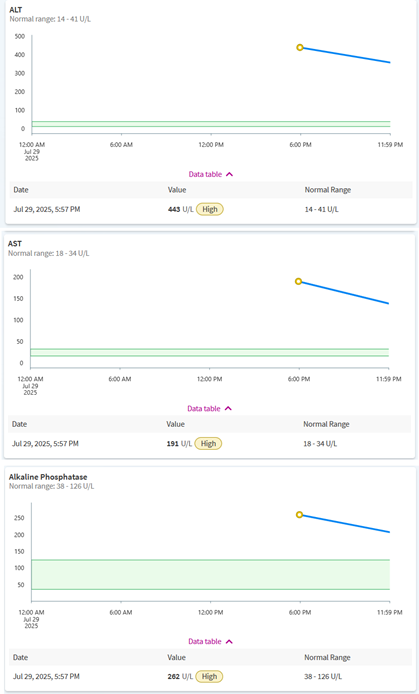
- Elevated liver enzymes: ALT 443, AST 191, Alkaline phosphatase 262
- White blood cell count: initially 10.1 (high-normal), later rising to 13.5 during my hospital stay
- Lactic acid: elevated at 2.2
Given the combination of elevated liver enzymes, neurological symptoms, and fever, the team considered possible causes, including viral hepatitis, tick-borne illnesses, and other infections.
Imaging and Further Diagnostics
I underwent:
- Chest X-ray: normal
- CT scan of the abdomen (with and without contrast): unremarkable
- Ultrasound of the liver and gallbladder: no infection detected
The most telling test came next, a lumbar puncture (spinal tap).
Lumbar Puncture Findings
My cerebrospinal fluid (CSF) results showed:

- Opening pressure: elevated at 25 cm H₂O (normal ≤20)
- High protein levels
- Increased white blood cells
These findings prompted consultation with an infectious disease specialist, who diagnosed me with aseptic lymphocytic meningitis.
Understanding Aseptic Lymphocytic Meningitis
There are several types of meningitis:
- Bacterial (caused by typical pyogenic bacteria like Neisseria meningitidis etc.) : very dangerous and potentially fatal (I didn’t have this type); vaccines exist for some strains
- Viral: caused by viruses such as enteroviruses, West Nile virus, cytomegalovirus, Epstein-Barr etc.
- Fungal or parasitic: less common
- Autoimmune or medication-induced: rare causes
Aseptic meningitis often has a viral cause, but can also result from certain atypical bacteria, including those spread by ticks and insects.
Extensive Testing
My CSF and blood were tested for a wide range of infections, including:
- Viral panels (meningitis/encephalitis PCR)
- Epstein-Barr virus
- Hepatitis panel
- West Nile virus
- Tick-borne illnesses (Lyme disease, anaplasmosis, Rocky Mountain spotted fever)
- Fungal infections (histoplasmosis, aspergillosis)
While all tests ultimately came back negative, it should be noted that tick-borne disease tests can give false negatives if performed too early. Given my recent yard work, insect bites, and elevated liver enzymes, the infectious disease team suspected a tick-related infection.
Neurology was also consulted to confirm that the aseptic lymphocytic meningitis wasn’t due to an autoimmune disorder. They ordered an MRI of the brain with/without contrast along with some autoimmune panels. All of this came back normal.
Treatment and Recovery
Initially, I was started on ceftriaxone as a precaution, then switched to IV vancomycin (which I reacted to and can no longer take). After that, I received IV meropenem and doxycycline.
The doxycycline was a turning point. My symptoms began improving with each dose. My neck stiffness eased, headaches lessened, eye redness faded, fevers dropped, and my liver enzymes trended back toward normal.
I was discharged once I was stable, continuing doxycycline orally at home. Follow-up labs confirmed normalization of my liver enzymes and white blood cell count.
Today, I have completed my antibiotics, have no fevers, and am steadily regaining my strength, though I still tire easily and need naps.
Final Thoughts
This experience was a powerful reminder that meningitis can present in many ways and that tick-borne illnesses are not always obvious. You might never see a tick, and not every bite leaves a rash.
I’m sharing my story for patients and healthcare providers alike. Early recognition, thorough testing, and the right treatment can make all the difference.
Thank you again for all your prayers, encouragement, and kind messages during my recovery.