In this anatomy quiz, you can test your knowledge of elevation and depression, which are special body movement terms used in anatomy. Nurses and other healthcare professionals use these terms when assessing patients or documenting.
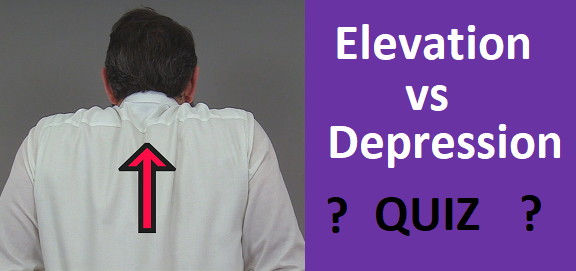
Before taking this quiz, you might want to review our elevation and depression anatomy notes. In addition, you might want to view our elevation or depression video demonstration.
Elevation and Depression Anatomy Quiz
(NOTE: When you hit submit, it will refresh this same page. Scroll down to see your results.)
Elevation and Depression Anatomy Quiz
1. What is elevation in anatomy?
a. A special body movement term that describes movement of a structure in an inferior direction.
b. A special body movement term that describes movement of a structure in a superior direction.
c. A special body movement term that describes lateral movement.
d. A special body movement term that describes medial movement.
The answer is b. Elevation has a body structure moving in a superior, or upward, direction. Remember, you get on the elevator to go up.
2. What is depression in anatomy?
a. A special body movement term that describes movement of a structure in an inferior direction.
b. A special body movement term that describes movement of a structure in a superior direction.
c. A special body movement term that describes lateral movement.
d. A special body movement term that describes medial movement.
The answer is a. Depression is a special body movement term that describes the movement of a body part in a downward direction.
3. Elevation and depression are terms that most commonly describe the movements of which two structures?
a. The foot and hand
b. The hips and femur bones
c. The scapulae and mandible
d. The wrist and ankle
The answer is c. Elevation and depression most commonly describe movement of the scapulae and mandible.
4. Which of the following describes elevation and depression body movements?
a. Bending the elbow
b. Twisting the torso
c. Chewing food
d. Shrugging the shoulders
e. Both c and d
The answer is e, both c and d. Chewing is an example of elevation and depression, as is shrugging the shoulders.
Don’t forget to tell your friends about this quiz by sharing it your Facebook, Twitter, and other social media. You can also take more fun nursing quizzes.
*Disclaimer: While we do our best to provide students with accurate and in-depth study quizzes, this quiz/test is for educational and entertainment purposes only. Please refer to the latest NCLEX review books for the latest updates in nursing. This quiz is copyright RegisteredNurseRn.com. Please do not copy this quiz directly; however, please feel free to share a link to this page with students, friends, and others.