This quiz is designed to test your knowledge on Angiotensin Receptor-Neprilysin Inhibitors (ARNIs). As a nurse, it’s essential to be familiar with these medications, their uses, potential side effects, and key monitoring parameters. By understanding ARNIs, you can better support patients with heart failure and ensure safe, effective treatment.
Don’t forget to watch the quick review on ARNIs and review the notes (coming soon).

Angiotensin Receptor-Neprilysin Inhibitors (ARNIs) NCLEX Pharmacology Quiz Questions
ECG/EKG Study Guide and Workbook for Nursing Students
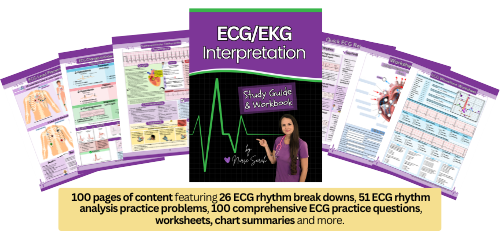
“ECG/EKG Interpretation Study Guide and Workbook by Nurse Sarah”. This book contain 100 pages of content featuring 26 ECG rhythm break downs, 51 ECG rhythm analysis practice problems, 100 comprehensive ECG practice questions, worksheets, chart summaries, and more.
You can get an eBook version here: “Nurse Sarah ECG Book” or a physical copy here: “ECG/EKG Interpretation Study Guide by Nurse Sarah“.
Angiotensin Receptor-Neprilysin Inhibitors (ARNIs) Nursing Pharmacology Quiz
1.Which medication below is considered a Angiotensin Receptor-Neprilysin Inhibitors (ARNIs)?
A. Enalapril
B. Ramipril/Valsartan
C. Sacubitril/Losartan
D. Sacubitril/Valsartan
The answer is D: Sacubitril/Valsartan. This is a combination drug that includes a neprilysin inhibitor (sacubitril) and an angiotensin-receptor blocker (ARB).
2. Which patient finding is a contraindication for taking an Angiotensin Receptor-Neprilysin Inhibitors (ARNIs)?
A. the patient has a blood pressure of 166/96 mmHg
B. patient is allergic to loop diuretics
C. patient took lisinopril 24 hours ago
D. patient’s potassium level is 3.8 mEq/L
The answer is C: The patient took lisinopril 24 hours ago. ACE inhibitors (lisinopril) and ARNIs should not be administered together for at least 36 hours due to the risk of increased angioedema and other side effects.
3. Which option best describes how Angiotensin Receptor-Neprilysin Inhibitors (ARNIs) work?
A. inhibits the breakdown of renin and angiotensin II
B. inhibits aldosterone and causes vasoconstriction
C. inhibits angiotensin II receptor and prevents the breakdown of ANP and BNP
D. increases the breakdown of natriuretic peptides and inhibits angiotensin II receptor
The answer is C: It inhibits the angiotensin II receptor and prevents the breakdown of ANP and BNP. This will help promote vasodilation and diuresis, which will lower blood pressure and help treat heart failure.
4. Your patient is taking an Angiotensin Receptor-Neprilysin Inhibitors (ARNIs), The nurse should monitor for which side effect that can occur from this medication? Select all that apply:
A. hyperglycemia
B. hyperkalemia
C. angioedema
D. hypotension
E. tinnitus
The answers are B, C, and D. Hyperkalemia (increased potassium level) and angioedema (particularly in the face and throat) are possible side effects of ARNIs. This is due to the inhibition of neprilysin and the effects on the bradykinin pathway.
5. The nurse knows that ARNIs are used to treat which condition below:
A. heart failure with reduced ejection fraction (HFrEF)
B. myocardial infarction
C. hypotension
D. diabetes mellitus
The answer is A. ARNIs, such as Sacubitril/Valsartan (Entresto), are primarily used to treat heart failure with reduced ejection fraction (HFrEF) by improving heart function.
6. What signs and symptoms demonstrate that the ARNI is NOT being effective from the patient’s treatment? Select all that apply:
A. crackles throughout lung field
B. increased appetite
C. gained 2 lbs in one week
D. orthopena
E. weight loss
The answers are A, C, and D. ARNIs are used to treat heart failure with reduced ejection fraction (HFrEF). Therefore, if the medication is not effective, the patient may start to present with signs and symptoms of heart failure. Options A, C, and D indicate that heart failure is worsening.
7. The nurse is providing education to the patient about how to take the ARNI. What would be INCORRECT for the nurse to include in the patient teaching? Select all that apply:
A. Take this at the same time as benazepril
B. Monitor your blood pressure and record it daily.
C. Increase fluid intake to 2-3 liters per day.
D. Eat foods rich in potassium.
The answers are A, C, and D: These are INCORRECT teaching statements to provide to the patient taking an ARNI. ARNIs are used to treat heart failure. Therefore, the patient is at risk for fluid volume overload from a weak heart. They would NOT consume foods rich in potassium (ARNIs can increase potassium levels), drink 2-3 liters per day (this is too much, but some limit it to <2 liters/day), and ARNIs should NOT be taken with ACEIs for at least 36 hours before or after taking an ARNI.
*Disclaimer: While we do our best to provide students with accurate and in-depth study quizzes, this quiz/test is for educational and entertainment purposes only. Please refer to the latest NCLEX review books for the latest updates in nursing. This quiz is copyright RegisteredNurseRn.com. Please do not copy this quiz directly to other websites or file sharing platforms.