Are you looking for a nursing school eBook that can help you prepare for your journey ahead in nursing school? Or perhaps you’re a current nursing student who is struggling and looking for tips to help you pass nursing school (or prepare for the dreaded NCLEX exam).
Or maybe you’ve already earned another degree, but you’re thinking of going back to nursing school to enter the exciting field of nursing. If you have any plans to attend nursing school, or if you’re already in nursing school, you need a guide to help you prepare. This eBook guide will help you make the most of your journey.
Our brand new book, “How to Pass Nursing School,” is an eBook guide developed exclusively for nursing students and anyone interested in attending nursing school. This guide is packed with information to help you prepare for nursing school, strategies to help you pass nursing school, tips for NCLEX, job searching and interviewing tips, and so much more. This is perhaps the most comprehensive book ever written on nursing school.
The author, S.L. Page, BSN, RN, graduated from nursing school with honors and passed the NCLEX test on her first try. She later went on to found this website, RegisteredNurseRN.com. She’s spent years helping thousands of nursing students succeed. She’s compiled all of her own tips into one easy-to-read guide.
In this guide, S.L. Page covers all aspects of nursing school, sharing the tips and strategies she used to help her graduate with honors. Whether you’re a high school student who knows nothing about nursing school, a student already in a nursing program, or even a recent graduate–this eBook has something for everyone.
Still not sure if this eBook is for you? You can use the “Look Inside” feature on Amazon.com. Just click the “buy it now” button below, and you’ll be taken to the sales page on Amazon.com. You can then view a sample of the eBook. Even if you don’t have an eBook reader, you can still buy and view this eBook on your PC (see the frequently asked questions below to learn how).
Book Interview with S.L. Page on “How to Pass Nursing School”
Ways to Buy “How to Pass Nursing School” by S.L. Page BSN, RN
eBook Version at Smashwords.com
ONLY $5.99 (eBook version)
Get this eBook for your iPad, Nook, Kobo, PDF format, Sony Reader, Home Computer, web browser, and other readers at Smashwords instantly.
OR
Buy the Paperback Version
Also available online at most major book and eBook retailers!
Nursing School eBook
Here’s just some of the information you’ll learn in this Book for nursing students:
- How to prepare for nursing school
- What is Nursing School Like?

- Finding a Nursing School
- Applying to Nursing School
- Tips for international students transferring to the U.S.
- Tips for returning adults
- Different types of nursing programs and degrees (LPN, RN, etc.)
- Sample curriculum and classes
- Information on how to pay for nursing school (scholarships, financial aid, student loans, etc.)
- Saving money on textbooks
- Information on care plans, clinicals, and nursing skills
- Nursing entrance, mid-curricular, and exit exams (HESI, ATI, etc.)
- Studying and test-taking strategies
- All about NCLEX
- Nursing career information and overview
- Common nursing specialties
- Preparing for interviews
- Preparing resumes and cover letters (you’ll receive cover letter and resume templates as a free bonus–these are in .docx format)
- Tips to get a job after graduation and how to advance in your career
Free Bonuses
In addition to receiving this eBook guide that is jam-packed with information on nursing school, you’ll also receive the following bonuses
- Blank weekly planner template–Stay organized by printing out a free blank weekly planner page, so you can fill in your classes and schedule for the week.
- Blank flashcard template–Flashcards are a great way to memorize definitions and concepts, and you’ll receive a basic blank template you can print out to make your own flashcards.
- Resume templates–You’ll receive a bundle of professionally designed resume templates to help you prepare a gorgeous resume quickly and easily.
- Cover letter templates–You’ll also receive cover letter templates to submit along with your resume. These templates are a great addition to your resume designs, and can go on top of the resume.
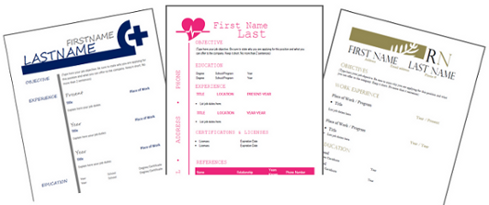 (This is a sample from the bundle of resume templates you’ll receive as a free bonus. All templates are in .docx format, and are best edited in Microsoft Word)
You’ll receive special instructions on how to download these bonuses/resume templates at the end of the eBook. All of these free bonus items above are in digital format (.docx format).
No waiting! You’ll get access to this digital eBook INSTANTLY after your purchase.
Only $5.99 (eBook Version)
Buy it Now–
Smashwords for iPad, Nook, Kobo, PDF format, PC, Sony Reader, and other reader formats.
OR
Buy it Now
Get it in a Paperback Version
You’ll receive the digital eBook or paperback version (your choice) and all of the free bonus templates mentioned above–all for one low price. Just one of the professionally designed resumes is worth that price, but you’ll receive this entire eBook, plus a whole bundle of freebies. That’s an amazing deal!!
Who Will This eBook Help?
This eBook starts with the very basic topics, and moves throughout everything you can expect to face in nursing school. It can help the following people:
High School Students Planning to Enter Nursing School
You’ll receive tips on how to start preparing for nursing school right now, and you’ll learn exactly what to expect along the way. If you’re a high school student, you need to start preparing as soon as possible.
Current Nursing Students
If you’re currently in nursing school, you’ll learn strategies to study, pass tests, save money on textbooks, and more.
Returning Adults
Already have a degree, or plan to go to nursing school as a returning adult? This eBook will tell you some things you can expect, and what you need to do to get up-to-speed.
International Students
If you’re an international student, you’ll find out what you need to do to become a nurse in the United States.
Recent Graduates
You’ll get tips on how to find a job, interviewing strategies, professionally designed resume templates (in .docx format), and more.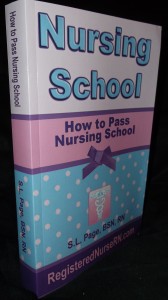
Get Started Today
If you want to become a nurse, or you’d like to attend nursing school, this eBook is for you. This eBook was just released, and we’re offering it at a special price of only $9.99. We may raise the price in the future. Buy it today, and you’ll get instant access.
What if I Don’t Have an eBook Reader? Can I Still Buy the eBook?
Absolutely! You don’t need a Kindle or eBook reader device to view the eBook. Amazon also allows people to download the free Kindle software onto their home computers. Or you can buy this eBook on Smashwords.com which allow users to download the eBook to your computer, iPad, Nook, Kobo, Sony reader, and more! This will allow you to view the eBook on a PC or other computing device. For more information, visit this free Kindle download page.
What if I want a physical copy of this eBook? How can I buy a copy?
We now have the eBook in a physical copy which you can purchase here. It is a paperback version.