- Rate: count the pulse rate for 30 seconds and multiply by 2 if the pulse rate is regular, OR 1 full minute if the pulse rate is irregular.
- Always count the apical pulse for 1 full minute.
- A normal pulse rate in an adult is 60-100 bpm.
- Strength: grade the strength of the pulse and check the pulse points bilaterally and compare them. NOTE: always check the carotid pulse points individually (not at the same time) to avoid stimulating the vagal response.
- 0: absent
- 1+: weak
- 2+: normal
- 3+: bounding
- Rhythm: is the pulse regular or irregular
ECG/EKG Study Guide and Workbook for Nursing Students

You can get an eBook version here: “Nurse Sarah ECG Book” or a physical copy here: “ECG/EKG Interpretation Study Guide by Nurse Sarah“.
9 Common Pulse Points (start from head-to-toe…this makes it easier when you have to perform this skill)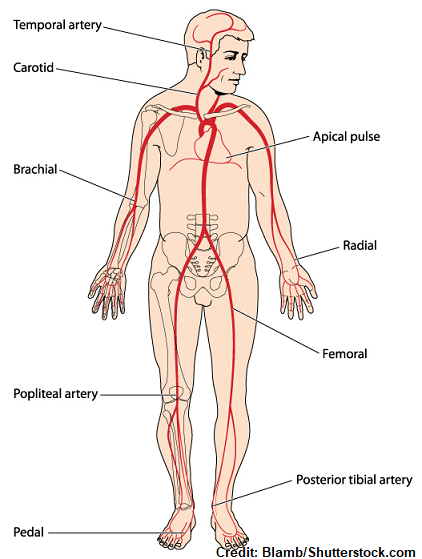
- Temporal
- Carotid
- Apical
- Brachial
- Radial
- Femoral
- Popliteal
- Posterior Tibial
- Dorsalis Pedis
Pulse Points Demonstration
Temporal
This artery comes off of the external carotid artery and is found in front of the tragus and above the zygomatic arch (cheekbone). This pulse point is assessed during the head-to-toe assessment of the head.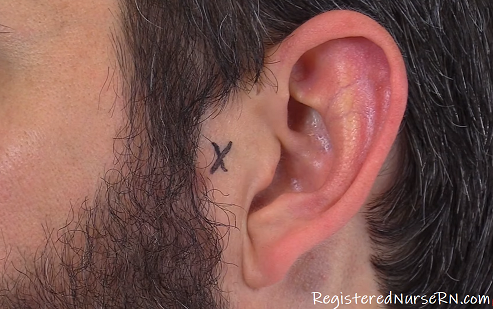
Carotid
This site is most commonly used during CPR in an adult as a pulse check site. It is a major artery that supplies the neck, face, and brain. As noted above, palpate one side at a time to prevent triggering the vagus nerve, which will decrease the heart rate and circulation to the brain. To find the carotid pulse point, tilt the head to the side and palpate below the jaw line between the trachea and sternomastoid muscle.
Apical
This site is assessed during the head-to-toe assessment and before the administration of Digoxin. The pulse rate should be 60 bpm or greater in an adult before the administration of Digoxin. Always count the pulse rate for 1 full minute with your stethoscope at this location. The apical pulse is the point of maximal impulse and is found at the apex of the heart. It is located on the left side of the chest at the 5th intercostal space midclavicular line. To find the pulse point:- Locate the sternal notch
- Palpate down the Angle of Louis
- Find the 2nd intercostal space on the left side of the chest
- Go to the 5th intercostal space at the midclavicular line and this is the apical pulse point

Brachial
This is a major artery in the upper arm that divides into the radial and ulnar artery. This site is used to measure blood pressure and as a pulse check site on an infant during CPR. To find this pulse point, extend the arm and have the palms facing upward. The pulse point is found near the top of the cubital fossa, which is a triangular area that is in front of the elbow.
Radial
This is a major artery in the lower arm that comes off of the brachial artery. It provides circulation to the arm and hand. It is most commonly used as the site to count a heart rate in an adult. To find this pulse point, extend the arm out and have the palms facing upward. It is found below the thumb in the wrist area along the radial bone.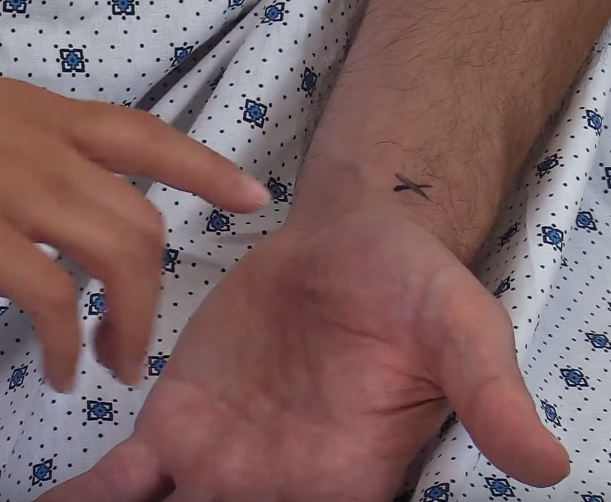
Femoral
This is a major artery found in the groin and it provides circulation to the legs. This artery is palpated deeply in the groin below the inguinal ligament between the pubic symphysis and anterior superior iliac spine.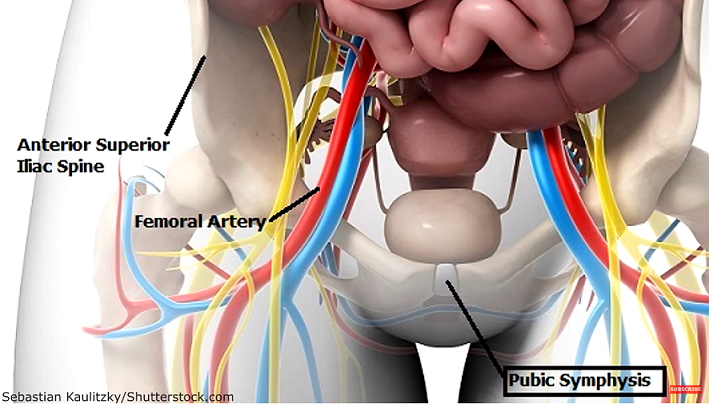
Popliteal
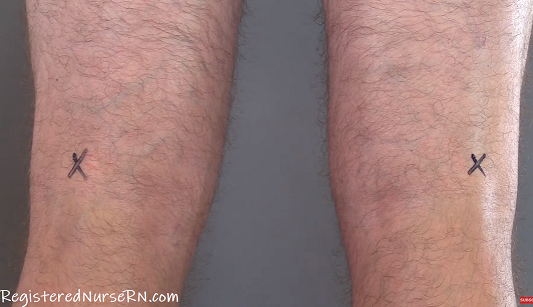
This artery is found behind the knee and comes off of the femoral artery. It is a rather deep artery like the femoral. To find the artery, the knee should be flexed. It is located near the middle of the popliteal fossa, which is a diamond-shaped pitted area behind the knee. Use two hands to palpate the artery…one hand assisting to flex the knee and the other to palpate the artery.
Posterior Tibial
This pulse point, along with the dorsal pedis, is assessed during the head-to-toe assessment and is particularly important in patients who have peripheral vascular disease or a vascular procedure (example: heart catheterization when the femoral artery was used to assess the heart). The posterior tibial pulse point is found on the inside of the ankle between the medial malleolus (bony part of the ankle bone) and Achilles tendon.
Dorsalis Pedis
To find this artery, locate the EHL (extensor hallucis longus) tendon by having the patient extend the big toe. Then palpate down this tendon and when you come to end of it, go to the side of the tendon and you will find this pulse point.