Meningitis is a serious condition involving inflammation of the meninges, the protective layers surrounding the brain and spinal cord. Let’s break down what meningitis is, its causes, symptoms, and essential nursing considerations.
What is Meningitis?
The term “meningitis” can be dissected as follows:
- Mening = meninges
- -itis = inflammation
So, meningitis literally means inflammation of the meninges.
What are the Meninges?
The meninges consist of three layers that pad and protect the central nervous system (CNS). Remember the mnemonic “PAD”: Pia → Arachnoid → Dura (inner to outer)

Pia Mater (innermost layer)
- Latin for “tender, delicate”
- Adheres directly to the brain and spinal cord
- Highly vascular, providing oxygen and nutrients to the CNS
Arachnoid Mater (middle layer)
- Greek origin, spider-like (think “weblike”)
- Forms the subarachnoid space, which contains cerebrospinal fluid (CSF)
- CSF is crucial for diagnosis of meningitis
Dura Mater (outermost layer)
- Think “durable” (strong and tough)
- Lies just beneath the skull
- Surrounding spaces: epidural (above) and subdural (below), associated with hematomas
Layers Most Affected in Meningitis?
- Meningitis typically affects the pia mater and arachnoid mater (leptomeninges)
- Dura mater is rarely affected due to its toughness, low vascularity, and distance from the CSF
Review on Meningitis
Causes of Meningitis
Meningitis can be infectious or non-infectious.
Infectious Meningitis
- Bacterial (most serious)
- Common pathogens: Neisseria meningitidis, Streptococcus pneumoniae, Haemophilus influenzae
- Preventable by vaccines (Hib, pneumococcal, meningococcal)
- Viral (most common)
- Often caused by enteroviruses or herpes simplex virus
- Fungal
- Examples: Cryptococcus, Histoplasma
- Parasitic
- Example: Naegleria fowleri (“brain-eating amoeba”)
Non-Infectious Meningitis
- Causes include autoimmune disorders (lupus, multiple sclerosis), medications (NSAIDs, antibiotics), or trauma/brain surgery
Pathophysiology of Meningitis (Infectious Meningitis)
- Pathogen Entry
- Can enter via the bloodstream, ears, sinuses, or trauma
2. Crossing the Blood-Brain Barrier and Enters Subarachnoid Space
- Pathogens may use “Trojan horse” methods via white blood cells to cross into the CNS
- Once in the subarachnoid space it contaminates the cerebrospinal fluid
3. Inflammatory Response
- White blood cells flood the CSF to fight infection
- Bacterial: neutrophils dominate
- Viral: lymphocytes dominate
- Cytokines increase vascular permeability → swelling → increased intracranial pressure (ICP)
Key Effects of Inflammation
- Fever (sudden >102°F in bacterial, gradual 100–101°F in viral)
- Severe headache
- Nausea and vomiting
- Neck stiffness (nuchal rigidity)
- Photophobia (light sensitivity)
- Neurological changes, potentially seizures
Special Signs
- Kernig Sign: Pain with knee extension while hip flexed

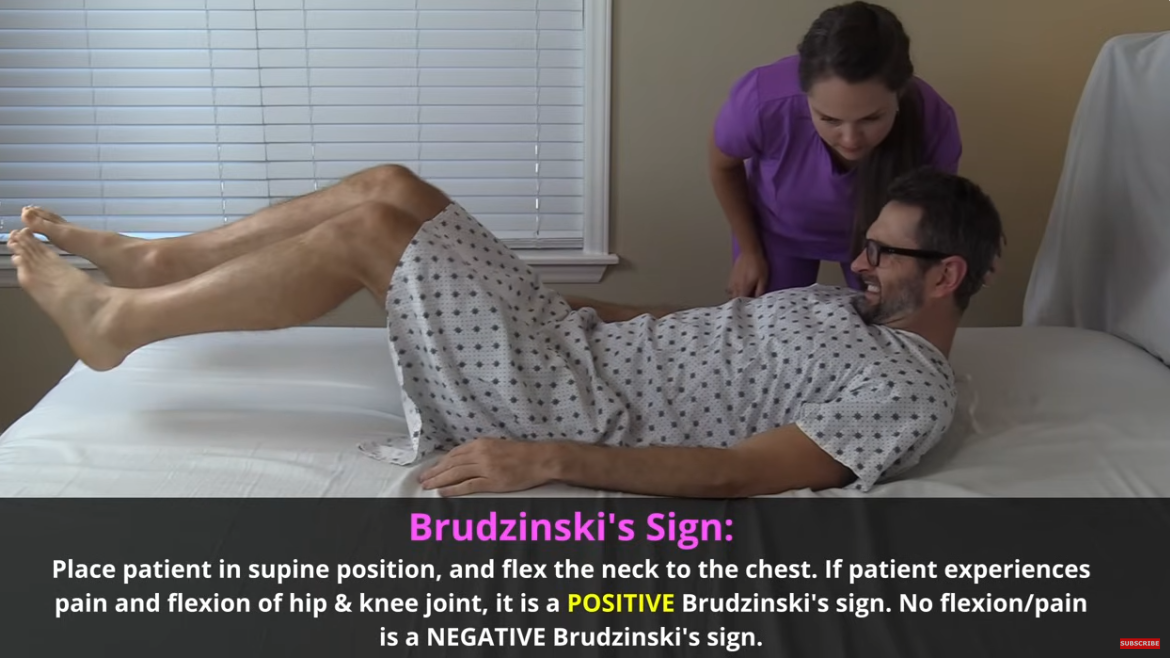
- Brudzinski Sign: Neck flexion causes hip/knee flexion
Adult vs. Pediatric Presentation of Meningitis
- Children <2 years: non-specific signs (refusal to eat, irritability, bulging fontanelles, lethargy, seizures)
Diagnosis of Meningitis
Workup includes:
- Laboratory tests: Blood cultures, nasal/sputum swabs
- Imaging: CT or MRI of the brain
- Lumbar puncture (LP): Confirms meningitis type
Important Lumbar Puncture Nursing Considerations
- Check coagulation status (INR, platelets)
- NPO if needed for sedation/anesthesia
- Positioning: fetal, prone, or sitting leaning forward
- Post-procedure: lay flat 1–2 hours to prevent CSF leak and headache
- Hydration and possibly caffeine can help reduce post-LP headache
CSF Findings in Meningitis Bacterial vs. Viral

Treatment and Nursing Considerations
Bacterial Meningitis:
- Treatment: IV antibiotics (empiric initially, then targeted), corticosteroids (dexamethasone to prevent hearing loss)
- Precautions: Droplet (e.g., Neisseria, Hib), Airborne if TB
- Vaccines: Hib, pneumococcal, meningococcal
Viral Meningitis:
- Treatment: Supportive care, antivirals for HSV, acetaminophen for fever/pain
- Precautions: Standard; contact precautions for certain viral infections
Fungal/Parasitic
- Fungal: Long-term IV antifungals
- Parasitic: Supportive care, antiparasitics if indicated
Non-Infectious
- Identify and remove triggers (medications, autoimmune flares)
- Supportive care for symptoms
Other Nursing Priorities for Meningitis
- Monitor temperature (high fevers ↑ ICP)
- Frequent neuro checks for ICP changes
- Maintain low-stimulation environment: dark, quiet, cool room
- Avoid opioids and sedatives that mask neuro changes
- Proper positioning: head of bed 30–45°, head midline, avoid neck flexion or excessive hip flexion
- Monitor ICP indicators: early (restlessness, confusion, headache, vision changes), late (seizures, Cushing’s triad)
You may be interested in: Meningitis NCLEX-Style Questions
References:
A.D.A.M., Inc. (2024, November 10). Kernig’s sign of meningitis. MedlinePlus. U.S. National Library of Medicine. https://medlineplus.gov/ency/imagepages/19077.htm
Centers for Disease Control and Prevention. (2025, September 9). About bacterial meningitis. Centers for Disease Control and Prevention. https://www.cdc.gov/meningitis/about/bacterial-meningitis.html
Centers for Disease Control and Prevention. (2025, September 9). About viral meningitis. https://www.cdc.gov/meningitis/about/viral-meningitis.html
Centers for Disease Control and Prevention. (2025, September 9). About fungal meningitis. https://www.cdc.gov/meningitis/about/fungal-meningitis.html
Centers for Disease Control and Prevention. (2024, March 25). Meningococcal disease | Infection control. https://www.cdc.gov/infection-control/hcp/healthcare-personnel-epidemiology-control/meningococcal-disease.html
InformedHealth.org. (2023, February 13). In brief: What happens during a lumbar puncture (spinal tap)? Institute for Quality and Efficiency in Health Care (IQWiG). https://www.ncbi.nlm.nih.gov/books/NBK367574/
National Institute for Health and Care Excellence. (2024, March). Evidence review for corticosteroids for treatment of bacterial meningitis: Meningitis (bacterial) and meningococcal disease: Recognition, diagnosis and management: Evidence review G4 (NICE Guideline No. 240). https://www.ncbi.nlm.nih.gov/books/NBK604108/