It can be overwhelming starting your very first nursing job. Even changing jobs or working on a new floor can induce anxiety in nurses with years of experience.
If I were a new nurse (or starting a new job on a new floor), here are some things that I’d want to know as soon as possible so that I could work safely and efficiently.
Things to Learn as a New Nurse (or on a New Floor)
Protocols, Policies, and Rules
One of the first things I’d want to do is review the protocols for that nursing facility or floor. The protocols will tell you virtually everything you need to know when certain situations arise, and you’ll want to be familiar with every type of protocol available.
For example, what should you do if a patient falls? What should you do if a medication error occurs? How should you start certain medications? Your facility will usually address these things in their protocols, so you’ll want to be familiar with them.
How do you find the protocols for your nursing facility? They may be located in a binder for you to review, or they may be online through a web portal. Your manager should be able to help you locate them.
I suggest you access your facility’s protocols, print them out (if possible), and review them regularly.
Important Document Forms
Another thing I’d want to know as a new nurse is where to locate important document forms. Nothing is worse than being in a huge rush as a nurse, yet you have to take 5 or 10 minutes searching for some document form that you’ll have to complete.
When you first start your job, take time to locate these forms and familiarize yourself with them. That way, when you have to fill out an informed consent sheet or a pre-op checklist, you’ll know where to find those forms and the general information required on them.
Learn Which Healthcare Providers Go with Each Group
You’ll want to be familiar with which healthcare providers work with each group. Many times, you’ll get patient admissions, and one patient will work with one doctor group, and another patient will work with another doctor group.
There may be times in which you’ll have to get a consult with, say, nephrology, and you’ll need to know that this nurse practitioner works with group x, while this PA (physician assistant) works with this other group.
Therefore, it is very helpful if you will simply learn the doctor groups, find out which group works with which group, and commit that information to memory.
Related: how to talk to doctors.
Learn the Names of People and Departments
I’d also want to learn the names of people and departments that I’d be calling regularly throughout my shift.
For example, you’ll want to be familiar with pharmacy, supplies, lab, transport, respiratory therapy, x-ray, and so forth. You’ll be contacting these people often, so you’ll want to get to know these departments.
In addition, you’ll want to know how to use programs (or the phone numbers) to contact these people. For example, let’s say you have to order some supplies. You’ll want to know how to find and launch the program on the computer (or find the form) to order them.
If you need to transport your patient to a different department, you’ll want to know how to use the program to get that done.
When you have time, especially during orientation, play with the software and ask other nurses if you can input the order or open the program so that you will know exactly how to do it once you are on your own.
Crash Cart Location
The location of the crash cart is another important thing you’ll want to know as a nurse. I’d recommend finding the crash cart on your unit, and then look through it. Granted, most of the crash cart drawers will be locked, but you can still look through some of the drawers, and the locked ones may be labeled.
In addition, during residency or orientation, there will often be an open crash cart for you to look through so that you can learn where everything is located inside, which especially important in case you ever need to find something fast (such as during a code situation).
Supply Closet or Supply Room
Another thing I’d do as a new nurse is find the supply closet (also called supply room). You’ll want to just scan the room and make mental notes of where things are located so you can grab them in a hurry when you need them.
For example, where is the IV tubing located? Where is the normal saline located? Where are the supplies to start an IV? Where are sterile gloves?
Learn the Skills of Your Coworkers
Finally, as time goes on, you’ll want to learn the skills and experience of your coworkers. Which nurse is really good at starting an IV? Which nurse is really good at nasogastric tubes or Foley catheters?
You may find that there are some nursing skills or nursing tasks that you haven’t performed in a while, or some that you don’t do particularly well as a new nurse. If you have trouble, you’ll want to know the nurse that can help you get the job done.
In that case, you’ll want to know who does that skill well or where you can find information you need if you forget something or have difficulty as you gain experience.
Need Help with the Nursing Job Process?
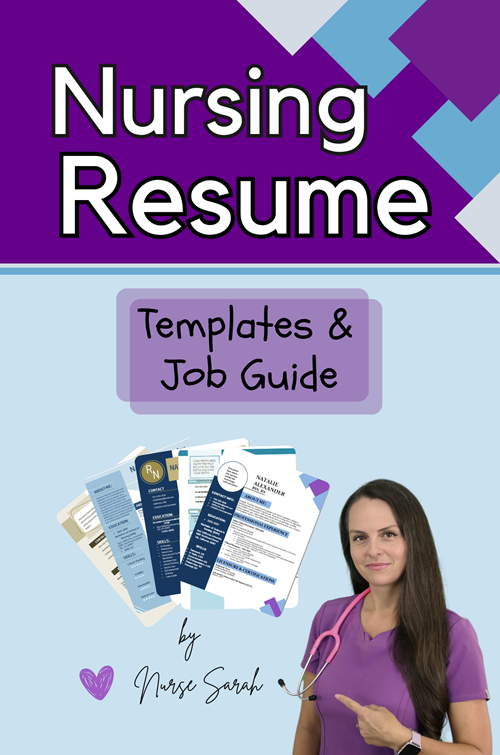
Check out our job guide called “Nursing Resume Templates and Job Guide by Nurse Sarah“. Nurse Sarah’s updated eBook guide & template bundle will walk you step-by-step through the entire job process. You’ll learn how to….
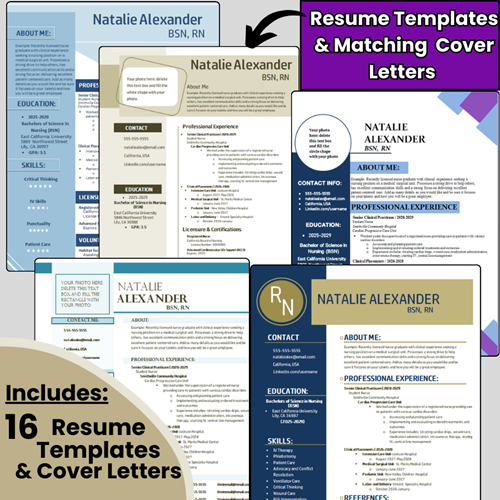
- Create a stunning resume and matching cover letter (16 professionally designed templates included with download)
- Ace your nursing job interview with the most common job interview questions (includes sample answers)
- Getting letters of recommendation & putting together your nurse portfolio
- Tips for finding your first nursing job and getting hired fast
- Tips to transition from nursing student to new nurse (talking to doctors, common struggles, etc.)
- Advancing in your career
- And more (see table of contents below)

Resume Templates and Matching Cover Letters Included
How to Buy
You can get an eBook version here or physical copy (affiliate ad) here.
Final Thoughts…
Working as a new nurse is tough, and moving to a new floor as an experienced nurse may still induce a certain level of anxiety and difficulty as your learn your way around.
If I were starting out as a new nurse or working a new floor, I’d be quick to learn the things listed above. These things can make the transition smooth, increase your efficiency as a new nurse, and keep your patients as safe as possible.