This is a quick NCLEX review over walkers for nursing students!
Walkers are assistive devices used to help a patient ambulate. As the nurse you must know the following material about walkers:
- How to tell if the walker properly fits the patient?
- How to ambulate with a walker?
- How to sit down and get up from a chair with a walker?
Don’t forget to take the quiz about walkers after reviewing this material.
Walker Nursing Review
Walker NCLEX Nursing Review
Properly Fit?
Before a patient uses a walker for the first time, the walker must be adjusted to fit the patient’s height. Walkers can be adjusted at the bottom via the legs of the walker (there are four legs that will need to be adjusted). Below are some key concepts to help you tell if a walker fits your patient properly.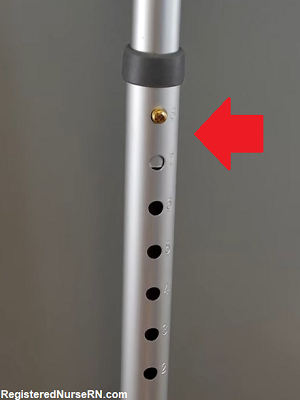
Mains points to remember:
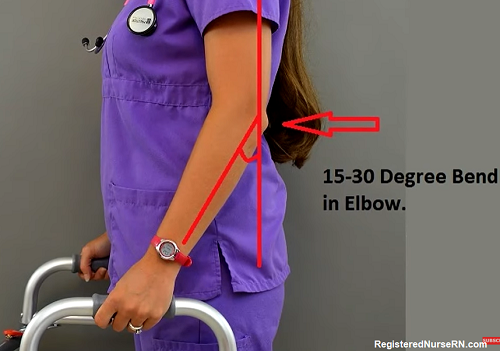
- When the patient holds the arms at their side, the hand grips of the walker should be even with the wrist crease.

- When the patient holds onto the hand grips of the walker, the elbows should flex at about a 15-30 degree angle.
Ambulate?
When a patient is learning how to use a walker, the nurse should apply a gait belt to the patient for safety. In addition, the nurse should stand on the patient’s WEAK side during ambulation.
Before a patient starts ambulating with a walker, the patient should get into a starting position by making sure that the middle of the foot lines up with the back tips of the walker.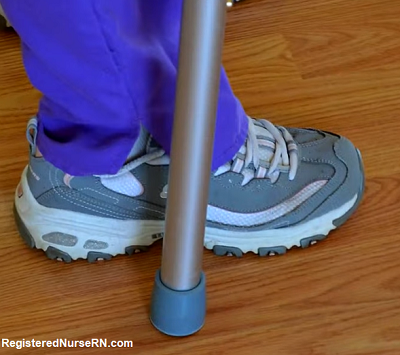
Also, tell the patient to look ahead while using the walker because some patients may want to look down and stare at their feet while ambulating. This could lead to an injury or fall.
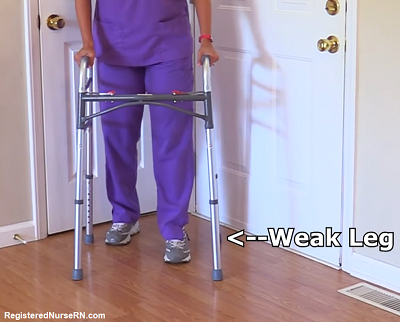 How to ambulate with a walker (please watch the video within this article to see a demonstration):
- First, the patient will lift and move the walker forward.
- Stress to the patient to make sure ALL FOUR TIPS of the walker’s legs are touching the ground after moving the walker forward before proceeding.
- Then the patient will move the WEAK side forward.
- Put weight on the hand grips via the hands.
- Then the patient will move the STRONG side forward.
- Repeat the steps above in order…
Sitting Down and Getting Up from a Chair?
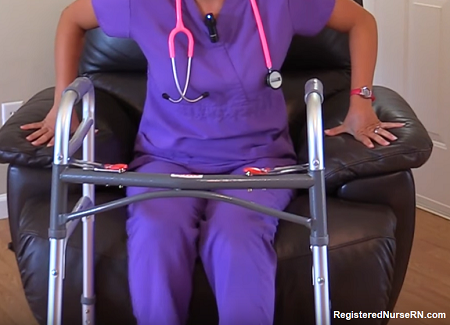
- Sitting Down: the patient will back up to the chair with the walker until they feel the chair with the back of their legs. The patient will then slightly extend the weak leg and bend the strong leg, while feeling for the chair’s arm rests with the hands. Once the arm rests of the chair are felt, the patient will continue to bend the strong leg and sit down in the chair.
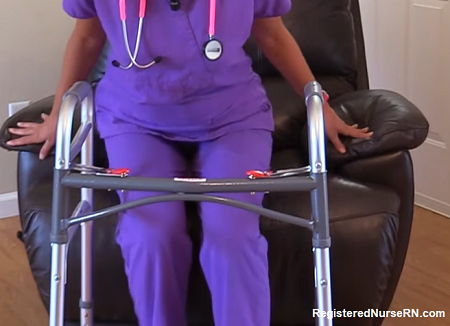
- Getting Up: the patient will place the walker in front of them while in the chair. Then the patient will lean forward in the chair, keep the weak leg slightly extended out, and place hands are the arm rests of the chair. Then the patient will push up with the hands on the arm rests of the chair and with the strong leg. Once standing, the patient will firmly grip the hand grips of the walker and begin to ambulate with the walker.
Going Up and Down Stairs with a Walker? It is not recommended a patient uses a walker to go up and down the stairs due to safety issues. The patient should use another type of assistive device like a cane. However, the patient should always consult with their doctor or physical therapist about this. For exams, you will not have to know about going up and down stairs with a walker.
You may also be interested in: Crutches or Canes
References: