This NCLEX review will discuss nephrotic syndrome.
As a nursing student, you must be familiar with nephrotic syndrome and how to care for patients who are experiencing this condition.
These type of questions may be found on NCLEX and definitely on nursing lecture exams.
Don’t forget to take the nephrotic syndrome quiz.
You will learn the following from this NCLEX review:
- Definition of nephrotic syndrome
- Causes
- Pathophysiology
- Signs and Symptoms
- Nursing Interventions
NCLEX Lecture on Nephrotic Syndrome
Nephrotic Syndrome NCLEX Review
What is it? A set of symptoms experienced by a patient with damage to the filtering structure of the kidneys (glomerulus), which is causing massive amounts of proteins to leak into the urine. Note: this is not a disease but a group of symptoms that occurs with a disease.
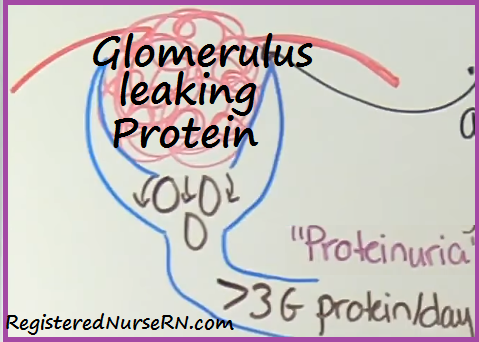 What is happening?
Many things can cause nephrotic syndrome, such as primary or secondary causes (see more information about this below), but whatever the reason, there is damage to the glomerulus of the nephron, and this allows massive amounts of proteins to leak into the urine (more than 3 grams per day):
The patient can lose various types of proteins from the bloodstream into the urine such as:
- Albumin (main protein lost)
What is one of the major roles of Albumin? To regulate oncotic pressure in the blood. However, the patient is losing a lot of albumin and will experience a condition called hypoalbuminemia. When hypoalbuminemia occurs the following can occur with this syndrome:
- EDEMA: swelling that will start in the face and around the eye and then progress to the extremities, abdomen, legs etc. WHY? Because when the albumin level is low (remember it normally regulates oncotic pressure, hence keeps water inside the capillary..think of albumin and water as a magnet for each other), the water inside the capillaries start to leak out into the interstitial tissue, which causes swelling.
- HYPERLIPIDEMIA: When there is a decrease in albumin in the blood, the liver tries to make more albumin but while it does this it also makes more cholesterol and triglycerides. Therefore, the patient may experience high lipid levels.
Can also lose:
- Immunoglobulins: helps fight infection (increases the patient risk for infection)
- Proteins that prevent clot formation: increased risk of clot development
What can cause Nephrotic Syndrome?
- Primary Causes: there is a problem with the kidney itself
- Minimal Change Disease: most common cause (pediatric population mainly affected with ages varying between 2-5 years). The reason for the disease is not really known but there are changes to the glomeruli that can only be seen with an electron (not regular) microscope.
- Focal segmental glomerulosclerosis: scarring that affects the glomeruli in the kidney
- Membranoproliferative glomerulonephritis: thickening of the glomeruli due to antibody collection
- Secondary Causes: a disease is causing the damage to the kidney
- Lupus, Diabetes, Hepatitis, Heart failure, HIV, medication (NSAIDS) etc.
It is important to note that nephrotic syndrome can go into remission. However, patients may experience periods of relapse. Therefore, it is very important the nurse teaches the patient about the signs and symptoms of nephrotic syndrome.
Signs and Symptoms of Nephrotic Syndrome
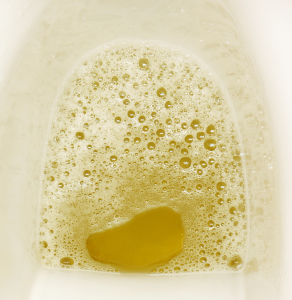
- Proteinuria (massive): this will cause the urine to be foamy/frothy
- Hypoalbuminemia…which leads to:
- Edema (extremities…legs, ankles, hands, ascites (fluid in the peritoneal cavity), face and around eyes

- Fatigued, anorexia, loss of appetite (tired, won’t feel like eating due to swelling but gaining weight)
- Hyperlipidemia
Nursing Interventions for Nephrotic Syndrome
Monitor fluid status very closely by:
- Performing daily weights: use same scale every day…standing scale is the best and compare current weight to previous daily weights.
- Monitor Intake and Output: patient may be on fluid restriction and diuretics along with IV albumin which will help remove extra fluid. The nurse will need to make sure urine output is normal (1 mL/kg/hr for peds and 30 cc/hr for adults),
- Assess swelling in extremities and measure abdominal girth

- Monitor the skin for breakdown around swollen areas because the skin is fragile and at risk for break down. Be sure to frequently turn the patient, avoid tight gowns or clothing, use sensitive type tapes (paper) if there is a need to secure IVs etc. Remember the patient is at risk for infection.
Prevent infection: the patient may be losing proteins that help fight infection and may be prescribed corticosteroids or immune suppressors which will further decrease the immune system.
- Strict hand washing, limit invasive procedures, educate family and friends about how to prevent the spread of germs, monitor temperature, heart rate (increased) and blood pressure (decreased).
Monitor for potential blood clots: Assess respiratory status: increase respiratory rate, dyspnea, tachycardia, chest pain, decreased oxygen saturation, needs oxygen when normally they don’t use it (these are signs and symptoms of pulmonary embolism), and assess for deep vein thrombosis (redness, swelling, and pain…legs, arms)
Implement diet for Nephrotic Syndrome:
- Sodium restriction along with fluid restriction if edema present, low fat (due to hyperlipidemia), and low potassium per MD order
Educate parents or patient about how to monitor for relapse with this condition:
- Monitoring urine for protein (over the counter kits)
- Signs and symptoms: frothy urine, weight gain (start performing daily weights with their morning routine), assess for swelling in the extremities and abdomen, preventing infection (may be taking corticosteroids or immune suppressors), diet teaching
References:
- “Childhood Nephrotic Syndrome | NIDDK”. National Institute of Diabetes and Digestive and Kidney Diseases. N.p., 2014. Web. 20 June 2017.
- “Nephrotic Syndrome In Adults | NIDDK”. National Institute of Diabetes and Digestive and Kidney Diseases. N.p., 2014. Web. 19 June 2017.