After giving birth to your baby, your breasts are already ready to nourish your little one. Throughout your pregnancy, your body has been preparing for this very moment. The first milk your breasts will produce is called colostrum, a unique and highly nutritious liquid that’s essential for your newborn in the early days of life.
What is Colostrum?
Colostrum is a thick, yellowish-orange liquid full of nutrients that help nourish and protect your baby. One of the key components of colostrum is immune cells, which help protect your baby from external germs and infections. It’s packed with everything your baby needs in the first few days, including antibodies that support their immune system and promote overall health.
How Much Colostrum Does Your Baby Need?
During the first few days of life, your baby’s stomach is tiny—about the size of a blueberry. Because of this, they don’t need a lot of milk. Colostrum, being dense in nutrients, is perfect for your baby’s tiny tummy. You may notice that your breasts feel soft during this time and wonder if you’re producing any milk. The answer is yes! Even though it might seem like not much is coming out, your body is already providing the colostrum your baby needs.
Building Your Milk Supply
This is a critical time for establishing your milk supply. The more often you feed your baby, the more your body will be signaled to produce milk. To encourage this, you should try to have as much skin-to-skin contact with your baby as possible. Undress your baby, place them directly on your chest, and let them nurse whenever they show signs of hunger. This helps your body know it’s time to start producing more milk as your baby’s stomach grows.
Expect Changes in Baby’s Feeding Habits
Newborns can be a little sleepy in the first few days, and some babies may need a little coaxing to latch and feed. However, around day two or three, you may notice your baby waking up more frequently, especially at night, when you might have been hoping for some rest. Babies can become a bit cranky and may want to nurse more often and for longer periods. While this can be exhausting, it’s a good thing—this frequent nursing stimulates your breasts to make more milk.
My Personal Experience
When I had my two sons, I exclusively breastfed both of them. For my first son, I pumped exclusively for almost two years due to latch issues, and for my second son, I breastfed him directly. With both babies, I made sure to bring them to the breast every two hours, day and night, to ensure they were getting enough milk and to build my supply.
With my first son, I also used a hospital-grade pump to make sure I was stimulating my milk production, especially since he had difficulty latching. I pumped every two hours, even at night, to ensure he got the colostrum and milk he needed. It was a lot of work, but it paid off in the end.
Pumping Tips
If you decide to pump during the early days, here are some helpful tips:
- Choose a Good Pump: Invest in a high-quality pump, especially if you plan to pump regularly. In the hospital, you’ll have access to hospital-grade pumps, which are ideal for building milk supply. Low-quality pumps can frustrate you and potentially affect your milk supply.
- Rent or Use a Hospital-Grade Pump: Many hospitals offer rental options for hospital-grade pumps, which are often more effective than over-the-counter models. Some insurance plans may even cover the cost of renting a pump, so it’s worth checking into.
- Be Patient with Pumping: In the first few days, don’t be discouraged if you don’t get much milk when pumping. Remember, you’re producing colostrum, not the larger quantities of milk that will come later. The goal is to establish your supply and stimulate your breasts to produce more milk as your baby’s stomach grows.
- Stay Consistent: If you’re pumping to build your supply, it’s important to pump regularly, especially during the early days. It’s crucial to pump at least every two hours to mimic your baby’s feeding schedule. This will help signal to your body that milk is needed.
The Transition to Full Milk Production
After a few days, as your baby’s stomach grows, your breasts will begin to transition from colostrum to a larger milk supply. Your body knows it’s time to produce more as your baby’s needs increase. This process typically begins around day three or four, when you may notice your breasts feeling fuller. By continuing to nurse or pump regularly, you’ll be ensuring that your milk supply continues to meet your baby’s needs.
Caloric Needs and Milk Transition
During this time, your body’s caloric needs will shift as your breasts transition from producing colostrum to milk. This is when you’ll start to notice your milk coming in. For many women, this process can take anywhere from three to five days. For me, it was always day three. At this point, you might notice your breasts feeling heavier and larger than before, and you may even experience leaking. This can be uncomfortable, especially if you’ve never experienced it before, and it can make you wonder, “Am I doing something wrong?” Don’t worry—this is a normal part of the process. By about day five or six, the heaviness and leaking will decrease as your milk supply begins to regulate itself.
During this time, it’s crucial to keep your baby on the breast as much as possible. This will help establish your milk supply and ensure that you’re producing enough milk for your baby. If you’re pumping and notice that you’re producing more milk than your baby needs, it’s actually a great opportunity to start building a freezer stash for later use. There are special bags available specifically for storing breast milk in the freezer, which can come in handy for those times when you’re not able to breastfeed directly.
Storing and Handling Breast Milk
Here are a few things to remember about storing breast milk:
- Freshly pumped breast milk lasts for up to four days in the refrigerator.
- If you want to store it in the freezer, it can stay frozen for six to twelve months.
- If you need to leave the milk out at room temperature, it can remain for up to four hours before needing to be refrigerated.
When it comes time to use frozen breast milk, avoid microwaving it. Instead, you can warm it up by placing it under warm running water for a few minutes. Also, it’s normal for breast milk to separate when frozen, with the water content sinking to the bottom and the fatty content rising to the top. This is nothing to worry about—simply shake the bottle gently to recombine the milk.
Nipple Care During the Early Days
As you begin breastfeeding, you may notice that your nipples are becoming sore or uncomfortable. This can be especially true if you’re nursing frequently. During these early days, it’s important to take good care of your nipples to avoid cracking and damage. Here are some tips to help you manage nipple discomfort:
- Air dry your nipples after each feeding to allow them to heal.
- Avoid using soaps or harsh chemicals on your nipples as they can dry them out.
- Use a nipple cream before and after each feeding, especially if you’re pumping.
- Wear a comfortable, wire-free bra that doesn’t press too tightly against your breasts.
Breast Rotation and Milk Flow
One of the questions many new moms have is how to rotate breasts during breastfeeding. The first milk your baby gets is called “foremilk,” which is watery and helps quench their thirst. As your baby continues to nurse, the milk becomes richer, transitioning into “hindmilk,” which is higher in fat and helps fill them up.
When it comes to rotating breasts, there are a few different strategies. I found that the best approach for my son was to let him nurse on one breast completely until he was satisfied. Then, I would offer the second breast. In the early days, my baby was usually fine with one breast per feeding, but as he grew and his hunger increased, he started finishing one breast and then moving on to the other.
Tracking which breast you fed from can be helpful. You can write it down, or use a free app that keeps track of your feeding schedule. For pumping moms, it’s important to consider foremilk versus hindmilk when storing milk. You don’t want to pump only the foremilk from each breast (which is what comes out first) and combine it in one bottle, as this would result in a bottle full of just foremilk. Instead, use a separate bottle for each breast. This helps avoid upsetting your baby’s stomach. Additionally, when pumping, be sure to store milk from each breast separately.
Signs That Your Baby is Getting Enough Milk
One of the most common concerns for breastfeeding moms is whether their baby is getting enough milk. Unlike bottle-feeding, where you can measure how much milk your baby is consuming, breastfeeding can feel more uncertain. However, there are several signs that your baby is getting enough milk:
- Swallowing sounds: Listen for swallowing sounds during breastfeeding. Some babies make louder swallowing noises, while others are more subtle.
- Ear movement and jaw motion: You’ll notice your baby’s ears wiggling as they swallow, and their jaw will move rhythmically.
- Clenched hands relaxing: When your baby is hungry, their hands are often clenched in a fist, but as they feed, their hands will relax and open.
- Weight gain: Your baby should be gaining weight steadily. During the first four months, they should gain about 5 to 8 ounces per week.
- Wet diapers: After a couple of days, your baby should have 6 to 8 wet diapers per day.
- Stool consistency: The first stool your baby passes is called meconium—dark green and sticky. After this, the stool of a breastfed baby is yellow and watery, and your baby may have several bowel movements each day. However, some exclusively breastfed babies can go several days without a bowel movement.
Breastfeeding Positions
In the early days, it’s essential to find a comfortable breastfeeding position that works for both you and your baby. You’ll spend a lot of time feeding, so good positioning can make the experience more comfortable and less stressful. Here are some common positions:
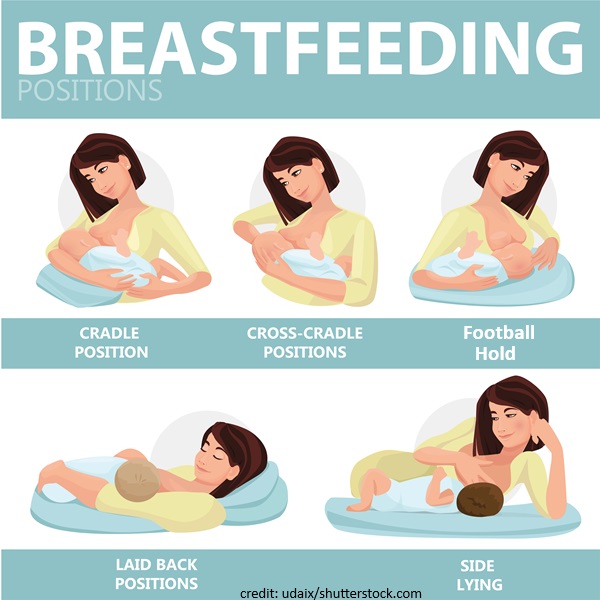
- Cross-cradle hold: This position involves holding your baby across your chest with their stomach facing yours. You’ll support their head and neck with the arm on the opposite side of the breast you are nursing from.
- Cradle hold: This is similar to the cross-cradle hold, but here you’ll hold your baby with the arm on the same side as the breast you’re nursing from.
- Football hold: This is often used by moms who have had a C-section or those with larger breasts. The baby’s body is tucked under your arm, and you use your other hand to support their head and your breast. A pillow can be helpful for this position.
- Side-lying position: This is a relaxed position where you lie on your side with your baby nursing from the breast closest to the surface you’re lying on. While some moms love this position, it might not work well in the early days if your baby is small or not coordinated enough.
- Laid-back position: In this position, you lie back with support and let your baby nurse while laying on top of you. This can be helpful if you have a fast milk flow or your baby has trouble managing it.
Latching
Getting a good latch is crucial for both you and your baby’s success with breastfeeding. A poor latch can cause nipple pain, nipple damage, and even issues with milk production. Here’s how to achieve a good latch:
- Wide-open mouth: Make sure your baby opens their mouth as wide as possible. You can encourage this by gently stimulating their rooting reflex or by teasing them with the nipple.
- Proper positioning: When your baby’s mouth is wide open, position the nipple so that it’s aligned with their nose. Gently bring the baby to the breast, aiming for the lower jaw to make contact first. This will ensure that the baby’s mouth takes in both the nipple and the areola.
- Check for pain: You may experience slight discomfort when first latching, but it should not be painful. If the latch is painful, gently break the suction (never pull the baby off) and try again.
Signs of a Good Latch
After latching, you should not experience constant pain. If the latch is correct, you’ll feel a slight tugging sensation but nothing sharp or unbearable. Here’s how to tell if the latch is good:
- Lips flanged out: Your baby’s lips should be flanged out like a fish.
- Ear movement and rhythmic sucking: You’ll see the baby’s ears move, and you’ll hear rhythmic swallowing.
- Relaxed hands: As your baby feeds, their hands will open up.
- Nipple appearance: After breastfeeding, your nipples should not appear flattened or pinched. Instead, they should be elongated but round.
- Empty breasts: After the feeding, your breasts should feel softer and emptier.
Final Thoughts
The early days of breastfeeding can be challenging, but it gets easier over time. You may feel overwhelmed, especially if you’re adjusting to a new baby and a new way of feeding. But hang in there. With practice, breastfeeding will become second nature. If you experience challenges, don’t hesitate to reach out to a lactation consultant for support. And remember, breastfeeding is a wonderful gift for both you and your baby. Congratulations on your new arrival!