This NCLEX review will discuss abruptio placentae, which is also called placental abruption.
As a nursing student, you must be familiar with the differences between abruptio placentae vs. placenta previa along with the nursing interventions and treatment. In the next review I will discuss placenta previa.
Don’t forget to take the free abruptio placentae and placenta previa quiz after reviewing this material.
Abruptio Placenta NCLEX Review Lecture
Abruptio Placentae NCLEX Review
What is abruptio placentae (placental abruption)? It is the detachment of the placenta from the uterine wall BEFORE the birth of the baby. It can be a partial or total separation.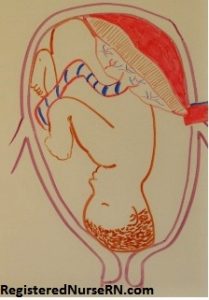
What is the placenta’s role? The placenta is a very important structure for:
- maintaining the pregnancy
- delivering nutrients and oxygen to the baby
- removing waste from the baby
Therefore, if the placenta detaches before the birth of the baby the baby can be deprived of nutrients and oxygen, which can lead to fetal death, AND the mother can experience hemorrhage and is at risk for developing DIC (disseminated intravascular coagulation)…discussed in more detail below in the signs and symptoms section.
When should the placenta normally detach from the uterine wall? It detaches itself after the birth of the baby because it is no longer needed. The placenta is usually delivered within 10-20 minutes after the delivery of the baby…..learn more about the stages of labor.
What can cause premature detachment of the placenta?
Risk Factors include:
- chronic hypertension
- development of preeclampsia
- previous placental abruption
- trauma to abdomen
- cocaine or smoking
- PROM (premature rupture of the membranes)
- multiples
- many pregnancies in the past
Signs and Symptoms of Abruptio Placentae
“Detached”
Dark red bleeding
Extended fundal height from concealed bleeding
Tender uterus
Abdominal pain/contractions
Concealed bleeding that can stay inside the uterus and back flow into the fallopian tubes. The patient can enter shock without seeing the amount of blood loss.
Hard abdomen
Experiences DIC (disseminated intravascular coagulation): a super event of clotting in the body followed by a depletion of clotting factors that leads to uncontrolled bleeding and possibly death.
- If the placenta is not delivered promptly after detachment, the body can experience DIC.
- WHY? When the placenta becomes damaged and detaches from the uterine wall, large amounts of thromboplastin (which is released from damaged platelets and this substance will convert prothrombin into thrombin) is released into mom’s circulation.
- This is going to lead to abnormal clotting throughout the body (blocking small vessels) and depleting clotting factors.
- The body senses this abnormal clotting so it tries to reverse it by causing fibrinolysis to breakdown the fibrin in the clot, but this will further complicate things and leads to the depletion of clotting factors, which leads to hemorrhage and even death.
- Remember mom is at major risk for hemorrhage but she has an open wound in the uterus from where the placenta detached.
- WHY? When the placenta becomes damaged and detaches from the uterine wall, large amounts of thromboplastin (which is released from damaged platelets and this substance will convert prothrombin into thrombin) is released into mom’s circulation.
Distressed baby (heart rate tone abnormalities)
Nursing Interventions for Abruptio Placentae
Watch for signs and symptoms of DIC:
- low platelets, fibrinogen, and prothrombin levels
- gum bleeding
- oozing type bleeding at injection or IV sites
- petechiae or ecchymosis
- micro-emboli (small clots that have formed in important vessels that supply vital organs): decrease in urinary output, chest pain, difficulty breathing, mental status changes
Assess bleeding: vital signs per protocol every 15 minutes, pad count, may be concealed (monitor and mark fundal height and abdominal girth)
No abdominal manipulation or vaginal exams until placenta previa ruled out with ultrasound
Left side lying position NO SUPINE (due to bleeding)
Monitor baby continuously with external monitoring: fetal heart tone
Type and cross match, CBC, clotting levels, Rh Factor (if Rh negative will need RhoGAM shot)
Needs IV (pick 18 gauge or bigger) for transfusion of blood products may be giving IV fluids and blood products
Prep for delivery of baby: vaginal if baby and mom stable OR c-section if baby or mom are showing signs of distress
References:
- Placenta abruption – definition: MedlinePlus Medical Encyclopedia. Medlineplus.gov. Retrieved 23 January 2018, from https://medlineplus.gov/ency/article/000901.htm
- Pregnancy complications | womenshealth.gov. womenshealth.gov. Retrieved 23 January 2018, from https://www.womenshealth.gov/pregnancy/youre-pregnant-now-what/pregnancy-complications