Gravidity and parity maternity nursing review for students!
Gravidity and parity are terms you must be familiar with when taking maternity nursing. These terms are helpful in communicating a patient’s health history regarding pregnancies and births. In this review you will learn the following:
- Definition of gravidity and parity
- Definition of nullipara, nulligravida, primipara, primigravida, multigravida, multipara
- How to calculate a patient’s gravida and para.
Don’t forget to test your knowledge on this content by taking the free gravidity and parity quiz.
Lecture on Gravidity and Parity
 Gravidity and Parity Maternity Nursing Review
Gravidity and parity are terms used in maternity nursing to help us communicate a patient’s pregnancy and birth history. There are actually two systems that are used in maternity to help with this type of communication.
One system is the five-digit system called the GTPAL, which I discussed in a previous review (click the link to access the review material). Gravidity and parity is a two-digit system and this is what we will concentrate on in this review.
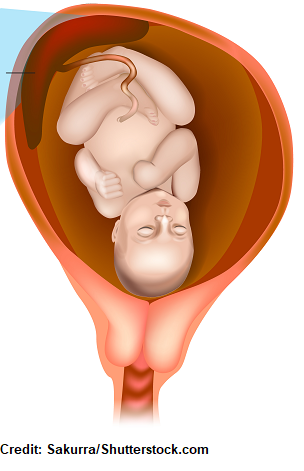
Gravidity is the number of times a woman has been pregnant. Another term used to describe gravidity is gravida. When you are trying to determine the gravidity, keep the following in mind:
- The outcome of each pregnancy (meaning…did the baby live or did the mom lose the baby?) is not relevant. So in other words, if the baby lived or did NOT we still count this as a pregnancy.
- The current pregnancy is included in the count. Don’t let this confuse you when you are answering test questions…always make sure you count the current pregnancy (if she is pregnant) with the other past pregnancies.
- Multiple babies? We’re not counting the number of babies BUT just the pregnancy itself. Therefore, if the woman is pregnant with twins, triplets, quadruplets etc., the gravida is just ONE.
Parity is the number of times a woman has birthed or completed a pregnancy (meaning the baby is no longer inside mom’s body) at 20 weeks gestation or greater. When you are trying to determine the parity, keep the following in mind:
- The count includes babies born alive or stillborn at 20 weeks gestation or greater.
- Multiple babies? Just like with gravidity, we’re not counting the number of babies born/birthed. Therefore, if a mom completes a pregnancy at 20 weeks gestation or greater with twins, triplets, quadruplets etc., the parity is just ONE.
Now, for each term you need to be very familiar with their individual terms. If you look at them below you can tell that their prefixes (nulligravida vs nullipara) are the same BUT their suffixes are different. Therefore, if you know the meaning of each prefix and the correct definition of the suffix, determining the meaning of each word is easy.
Prefix meanings:
- Nulli: never or none
- Primi: first
- Multi: many
Terms to Know:
- Nullipara: a woman has never completed a pregnancy at 20 weeks gestation or greater.
- Nulligravida: a woman has never been pregnant.
- Primipara: a woman has only once completed a pregnancy at 20 weeks or greater.
- Primigravida: a woman has been pregnant once or is currently pregnant for the first time.
- Multipara: a woman has completed two or more pregnancies at 20 weeks gestation or greater.
- Multigravida: a woman has been pregnant two or more times.
Gravida and Parity Examples (Scenarios)
Example 1: During the health history collection on a female patient at a women’s health clinic visit, the patient tells you she is not currently pregnant but has been pregnant three times before. She states that at 39 weeks gestation she gave birth to a boy. However, the other two pregnancies ended at 7 and 10 weeks gestation. How would you calculate the patient’s gravidity and parity?
Answer: Gravida 3, Para 1
Rationale: The patient is NOT currently pregnant so we won’t count this in the gravida. However, she has been pregnant three times before. So, her gravida is THREE. The patient further explains that she has only completed ONE pregnancy at 39 weeks and the other two were completed at 7 and 10 weeks gestation. Remember parity is the number of pregnancies completed at 20 weeks gestation or more. Therefore, the patient’s parity is 1.
Example 2: A patient is pregnant with twins at 30 weeks gestation. This is her first pregnancy. How would you calculate the patient’s gravidity and parity?
Answer: Gravida 1, Para 0
Rationale: This is the patient’s FIRST pregnancy. Therefore, gravida is ONE (remember that the number of babies is NOT added to the gravidity). She is still pregnant and has not completed the pregnancy yet. Therefore, the parity is ZERO.
*However, let’s say she gives birth at 38 weeks gestation to twins. What would the gravidity and parity be now? Gravida 1, Para 1 (the parity changes since she has now completed the pregnancy…again the para ISN’T two because we don’t calculate the number of babies).
More Maternity Reviews….
References:
Pregnancy | CDC. Retrieved 13 January 2020, from https://www.cdc.gov/pregnancy/index.html
Pregnancy | Womenshealth.gov. Retrieved 13 January 2020, from https://www.womenshealth.gov/pregnancy