Most patients who have Congestive Heart Failure, also known as CHF, hate the diet restrictions they are on. Lets face it, if you or I were on the low salt, watch your fluid intake diet we would hate it as well. But, however, for the CHF patient it is very vital they follow and stick to the diet restrictions.
As the registered nurse (RN), you are responsible for teaching the patient about these diet restrictions and providing them with reading material that will serve as a guide to help them when they get home.
As the nurse teaching the CHF patient, try to make it interesting and interactive so they will remember things after they go home. Remember diet teaching for the Congestive Heart Failure patient should not start the day of discharge but at admission and throughout their hospital stay.
Methods on How to Teach a Low Salt Diet to Congestive Heart Failure Patients
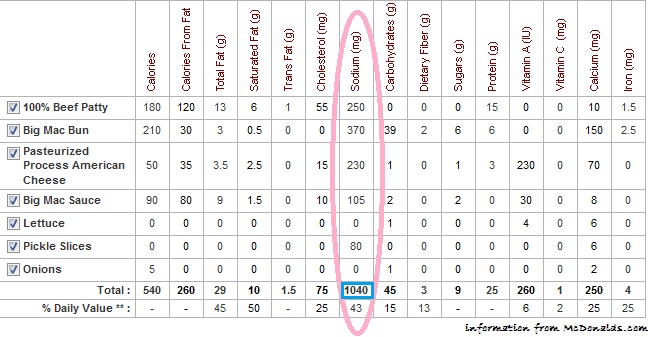
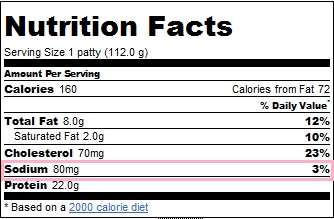
- Use visual aids! For example, have a nutrition food label for a McDonald’s Big Mac and Regular Turkey Burger and show the patient the difference in sodium content. This will help the patient understand how to read food labels and that many foods vary in their sodium content. Below are food labels for a McDonald’s Big Mac VS Regular Turkey Burger Patty:
Sodium Content in McDonald Big Mac is 1040 mg
Sodium Content in Turkey Burger Patty 80 mg
- Use Audio/Visual aids. If your patient learns the best by watching and listening, use a video to help teach them. There are a lot of dvds and free online videos to help teach patients about how to manage CHF. For example, if you go to YouTube and type in “Congestive Heart Failure Diet” there are many search results that pop up. For instance, here is a great video to help teach patients about “Living with Congestive Heart Failure”. I found that not only can a patient learn from this but the nurse as well, especially if you are not familiar with the disease.
- Use demonstrations and have the patient participate. When teaching a patient on how to manage salt in their diet the best time to do this is during breakfast, lunch, and supper time. To help your patient better understand their sodium help the patient measure how much sodium they can add to that particular meal. In addition, have them participate in keeping track of their salt and fluid intake by writing it down. For example, a CHF patient can have no more than 2 gms of salt a day. This is only 1 teaspoon of salt a day! WOW! Show them with a measuring spoon how much salt this is. They will be shocked at how little 1 teaspoon really is.
Key Points to Keep in Mind When Teaching the Congestive Heart Failure Patient
- Assess the patients learning needs. To do this quiz your patient on: how much salt they think they are allowed to have, how they keep track of their sodium content, what does a typical meal for them include (or have them tell you everything they ate yesterday). Some patients may be really good at watching their sodium intake while others lack the ability to fully understand it. Some patients do not see the harm in eating canned vegetables and soups because they are not aware of how to read the food labels.
- Assess the patients education level. Some patients have not graduated from high school or even completed middle school. If this is the case you will have to change the way you teach them. For example, reading materials may not be as beneficial to them as compared to visual aids or demonstrations.
- Assess if your patient is well enough to learn! If you have ever worked with Congestive Heart Failure patients before you know how sick these individuals are. They are sometimes doing good enough to breathe on their own. If a patient is too sick to learn, teach the patients family members or spouse. In most cases, this is usually the person who is preparing the meals so they need to be taught how to watch sodium intake.
- Keep it simple, be creative, and positive! Many patients view CHF as a death sentence. They feel depressed because the foods they once enjoyed eating are no longer an option. Try to not make the diet restrictions sound like rules. Try to provide (or point them in the right direction) them with cook books that allow them to eat their favorite foods but without the sodium content. In addition, try to keep diet teaching simple!