Atrial Septal Defect NCLEX questions for nursing students. Atrial septal defect is a congenital heart defect disorder.
Don’t forget to watch the lecture on atrial septal defect before taking the quiz.
This quiz is part of a pediatric NCLEX review series.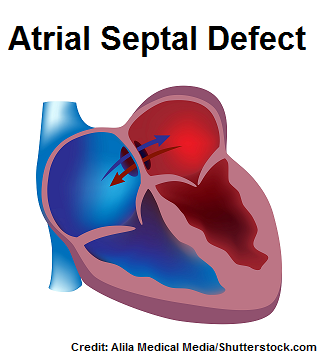
Atrial Septal Defect NCLEX Questions
This quiz will test your knowledge on atrial septal defects (ASD) in preparation for the NCLEX exam.
(NOTE: When you hit submit, it will refresh this same page. Scroll down to see your results.)
Atrial Septal Defect NCLEX Questions
1. True or False: Atrial septal defects are characterized by a hole in the interatrial septum that allows blood to mix in the right and left atria, which are the lower chambers of the heart.
The answer is FALSE. Atrial septal defects are characterized by a hole in the interatrial septum that allows blood to mix in the right and left atria, which are the UPPER (not lower) chambers of the heart.
2. A patient is diagnosed with a large atrial septal defect. You’re providing information for the patient on the complications related to this condition. What topics will you include in the patient’s education? Select all that apply:
A. Tet spells
B. Heart failure
C. Stroke
D. Pulmonary Hypertension
E. Rheumatic Fever
The answers are B, C, and D. All of these are complications of a large atrial septal defect.
3. An echocardiogram shows that your patient has an atrial septal defect located at the bottom of the septum near the tricuspid and mitral valves. As the nurse you know this is what type of atrial septal defect (ASD)?
A. Ostium Primum
B. Ostium Secundum
C. Sinus Venosus
D. Coronary Sinus
The answer is A. An ostium primum is an atrial septal defect located at the bottom of the septum near the tricuspid and mitral valves (atrioventricular valves).
4. You’re caring for a 2-year-old patient who has a large atrial septal defect that needs repair. This defect is causing complications. These complications are arising from an abnormal shunting of blood throughout the heart. As the nurse, you know that a __________________ shunt is occurring in the heart due to the defect.
A. Right-to-left
B. Right
C. Left
D. Left-to-right
The answer is D. A left-to-right shunt is occurring because the pressure in the left side of the heart is higher than the right, which allows blood to easily flow into the right side through the hole in the interatrial septum. This will cause pulmonary hypertension and heart failure overtime.
5. You’re assessing the heart sounds of a child with an atrial septal defect. You note a heart murmur at the 2nd intercostal space at the left upper sternal border. Heart murmurs noted in patients with an atrial septal defect are called?
A. Holosystolic murmurs
B. Diastolic murmurs
C. Early systolic murmurs
D. Midsystolic murmurs
The answer is D. In patients with ASDs, the nurse may notice a midsystolic (also called systolic ejection murmur) at the 2nd ICS at the left sternal border. This is due to increased blood flow through the pulmonic valve. The murmur is quiet at the beginning of systole, increases mid-systole and then decreases at the end of systole…it ends before S2 . S2 is wide, fixed splitting due to the slowness of the pulmonic valve closing.
6. Select the structure below that allows blood to flow from the right to left atrium in utero and that should close after birth:
A. Ductus Arteriosus
B. Formen Ovale
C. Ductus Venosus
D. Ligamentum teres
The answer is B. The formen ovale allows this to occur.
7. After admitting a child with an atrial septal defect, you start developing a nursing care plan. What nursing diagnoses can you include in the patient’s plan of care based on the complications that arise from this condition? Select all that apply:
A. Activity Intolerance
B. Risk for Infection
C. Decrease Cardiac Output
D. Excess Fluid Volume
E. Risk for Aspiration
The answers are A, B, C, and D. Patients who are hospitalized with an ASD will be having complications that arise from the left to right shunt of blood flow in the heart, which can lead to heart failure and pulmonary hypertension. In heart failure, there is decreased cardiac output, which will lead to activity intolerance and excess fluid volume. Furthermore, pulmonary hypertension is presenting and this will cause the lungs to become congested with fluid. Many patients with a large ASD will have frequent lung infections from the congestion in the lungs. So, the patient is at risk for infection.
8. True or False: Atrial septal defects can lead to a decrease in lung blood flow.
The answer is FALSE: ASDs can lead to an INCREASE in lung blood flow (not decrease).
More NCLEX Quizzes

Don’t forget to tell your friends about this quiz by sharing it your Facebook, Twitter, and other social media. You can also take more fun nursing quizzes.
*Disclaimer: While we do our best to provide students with accurate and in-depth study quizzes, this quiz/test is for educational and entertainment purposes only. Please refer to the latest NCLEX review books for the latest updates in nursing. This quiz is copyright RegisteredNurseRn.com. Please do not copy this quiz directly; however, please feel free to share a link to this page with students, friends, and others.